
ISO 9001 Certification Nairobi: Where Better Quality Standards Begin
Most Nairobi businesses don’t go looking for ISO 9001 certification because they’re bored. Usually a tender asks for it, a big client starts asking awkward questions about consistency, or a run of complaints makes it obvious that “we’ve always done it this way” has stopped working.
Whatever the trigger, ISO 9001 Certification Nairobi businesses pursue tends to deliver the same thing: fewer mistakes, clearer processes and customers who come back. Below, we’ll look at what the standard asks for, how it raises quality in practice, and what the route to certification looks like for a company in the city.
What ISO 9001 Actually Asks For
ISO 9001:2015 sets out the requirements for a Quality Management System, or QMS. It doesn’t tell you how to make your product or run your service. Instead, it asks you to show that you have a reliable, documented way of meeting customer requirements and improving over time.
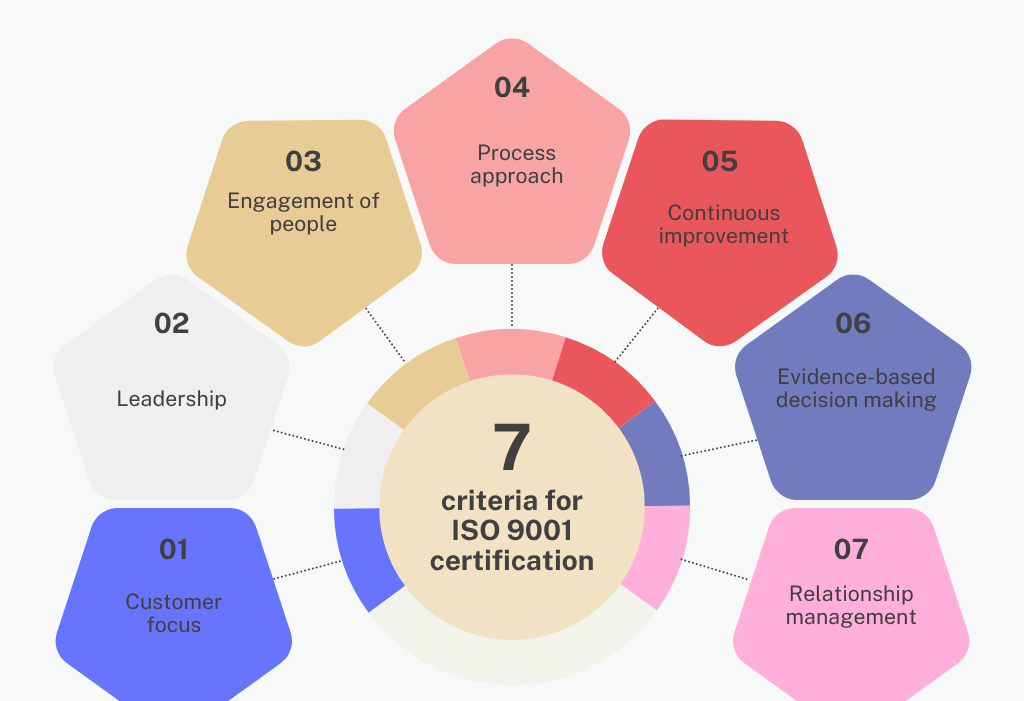
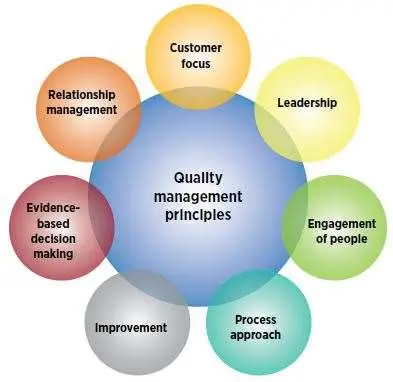
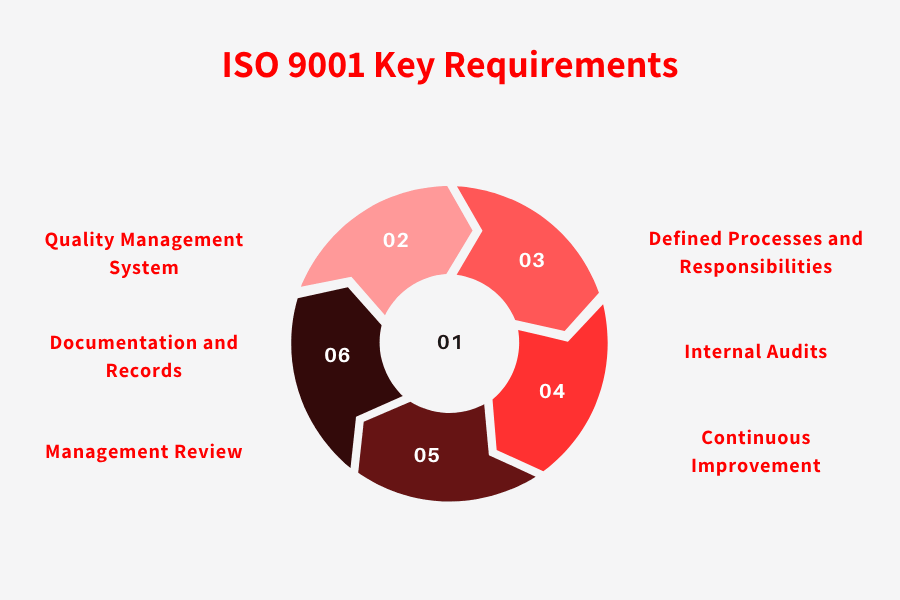
In practice, a certified QMS covers these areas:
- Customer focus: understanding what customers need and checking whether you’re delivering it.
- Leadership: senior managers taking ownership of quality instead of leaving it to one overworked coordinator.
- Process control, so key activities are defined, followed and measured.
- Risk-based thinking, which means spotting what could go wrong before it does.
- Handling of nonconformities, complaints and corrective actions.
- Internal audits and management reviews that keep the system honest.
If the term QMS is new to you, our explainer on what a QMS system is and why it matters is a good place to start.
The Quality Problems Nairobi Businesses Know Too Well
Talk to managers across Industrial Area, Westlands or Upper Hill and the same headaches keep coming up:
- Orders delivered late or wrong because the process lives in one person’s head.
- Quality that swings depending on which shift, branch or supervisor is on duty.
- Customer complaints that get handled once and then happen again next month.
- Suppliers who cut corners, with nobody checking until the product reaches a customer.
- New staff learning the job by watching whoever happens to be nearby.
- Losing tenders to competitors who can simply attach a certificate.
None of these are unusual, and none of them mean a business is badly run. They’re the growing pains of a company that has outgrown informal habits. ISO 9001 gives you a structured way through them.
How ISO 9001 Raises Quality Standards in Practice
The improvements don’t come from the certificate itself. They come from the habits the system builds, which an external auditor then checks every year.
Consistent Processes Across Every Team
Once key processes are written down and agreed, the result stops depending on who’s working that day. A customer ordering from your Mombasa Road warehouse gets the same service as one served from your CBD office.
Problems Get Fixed at the Root
ISO 9001 asks you to record nonconformities and find out why they happened. That shifts the conversation from “who messed up?” to “what in the process let this through?”, which is where lasting fixes come from.
Decisions Based on Real Data
- You track things like on-time delivery, complaint rates and rework costs.
- Management reviews use those figures instead of gut feeling.
- Trends show up early, before they turn into lost customers.
Better Control Over Suppliers
The standard expects you to evaluate and monitor the suppliers you rely on. For manufacturers and distributors in Nairobi, where one late raw material shipment can stall a whole production week, that alone can pay for the effort.
Before and After ISO 9001: A Quick Comparison
Here’s how a typical growing business looks before a QMS, compared with the same business once it’s certified:
| Area | Without a Formal QMS | With ISO 9001 Certification |
|---|---|---|
| Processes | Informal, often known by one or two people | Documented, agreed and followed by every team |
| Customer complaints | Handled case by case, often repeated | Logged, investigated and fixed at the root cause |
| Staff training | Learned on the job, varies by supervisor | Competence defined, training recorded |
| Supplier quality | Checked only when something goes wrong | Suppliers evaluated and monitored regularly |
| Management decisions | Based on instinct and memory | Based on measured performance and review meetings |
| Tenders and big clients | Often screened out at the first stage | Internationally recognised proof of quality control |
Why It Matters for Winning Work in Nairobi
Quality improvement is the main reason to do it, but the commercial side is hard to ignore. Many tenders from government bodies, banks, multinationals and NGOs either require ISO 9001 or give extra marks to suppliers who hold it.
- It gets you past pre-qualification stages that screen out uncertified bidders.
- It reassures international buyers who can’t visit your premises before signing.
- It gives your sales team something concrete to point to, beyond “we’re very reliable”.
- It helps when expanding into Uganda, Tanzania, Rwanda and the wider region, where the same certificate is recognised.
For many firms, the first tender won on the back of the certificate covers a big share of what the project cost.
Which Businesses in Nairobi Benefit Most
ISO 9001 is designed to work for any organisation, whatever its size or sector. Even so, some businesses feel the benefits faster:
- Manufacturers and food processors in Industrial Area and along Mombasa Road.
- Construction, engineering and facilities management firms bidding for public contracts.
- Logistics, clearing and forwarding companies serving importers and exporters.
- Hospitals, clinics and laboratories where consistency affects patient outcomes.
- IT, BPO and professional services firms working with overseas clients.
- Schools, training institutions and SACCOs that want tighter internal control.
A 15-person firm won’t need the same system as a large manufacturer. A sensible consultant scales the documentation to fit your size, rather than burying you in paperwork.
The Path to ISO 9001 Certification in Nairobi
Most projects follow a similar sequence, and a typical timeline runs from three to six months:
- A gap analysis comparing how you work today with what the standard requires.
- Defining your quality policy, objectives and the scope of the system.
- Mapping and documenting key processes, based on how work really gets done.
- Training staff and running the system for long enough to produce records.
- An internal audit and a management review.
- The two-stage certification audit by an accredited certification body.
Our guide to ISO certification audit stages explains what happens at Stage 1 and Stage 2. It’s also worth reading our list of documents required for ISO certification before you begin.
Budget is usually the next question. Our breakdown of ISO certification cost in Kenya covers the factors that push the price up or down, and our article on ISO consultant vs certification body explains who does what.
Common Mistakes to Avoid
We see the same slip-ups again and again with first-time projects. Most of them are easy to avoid once you know about them:
- Copying a template manual from the internet that describes some other company’s processes.
- Treating ISO 9001 as a quality department project, while senior managers stay out of it.
- Writing procedures nobody reads, instead of short ones people actually use.
- Rushing to the audit before the system has produced enough real records.
- Relaxing once the certificate arrives, then scrambling before each surveillance audit.
The businesses that get the most from ISO 9001 treat it as the way they run things, not a folder they dust off once a year. Getting that mindset right early is worth more than any template, and it makes each audit far less stressful.
Frequently Asked Questions
Is ISO 9001 mandatory in Kenya?
No, it’s voluntary. That said, many tenders and large buyers treat it as a requirement in all but name.
How long does the certificate last?
An ISO 9001 certificate is valid for three years, with surveillance audits each year and a recertification audit at the end of the cycle.
Can we add other standards later?
Yes. ISO 9001 shares the same structure as ISO 14001 environmental management and ISO 45001 health and safety, so many firms start with quality and build an integrated system over time.
Final Thoughts
Quality problems rarely fix themselves as a business grows. They multiply. ISO 9001 Certification Nairobi companies achieve turns good intentions into a system that works the same way every day, whoever is on shift.
- It builds consistent processes and fixes problems at the root.
- It gives clients and tender boards independent proof of quality.
- It lays the groundwork for other ISO standards when you’re ready.
Ready to Raise Your Quality Standards?
AceQu helps businesses across Nairobi and East Africa implement ISO 9001, from the first gap analysis to the certification audit and beyond. Book a free consultation and find out how close you already are.
Talk to Our ISO 9001 TeamFor the standard’s own summary, see ISO’s page for ISO 9001:2015, or this overview of the ISO 9000 family of standards.