
ISO 45001 Certification Mombasa: Why Safety Can’t Be an After thought
Walk past the container yards at Kilindini on a February afternoon and you’ll feel it straight away: heat bouncing off the concrete, reach stackers moving boxes overhead, trucks queuing for the gate. It’s a place where one careless moment can end in a serious injury, which is exactly why more employers are looking at ISO 45001 occupational health and safety certification as a practical way to manage those risks.
ISO 45001 Certification Mombasa businesses pursue today isn’t just about the port, though. Hotels in Nyali, factories in Changamwe, fuel depots, warehouses along the Mombasa-Nairobi highway and hospitals across the county all face their own version of the same problem.
This guide covers what the standard asks for, how it fits alongside Kenyan law, and what getting certified looks like for a Mombasa organisation.
What ISO 45001 Actually Is
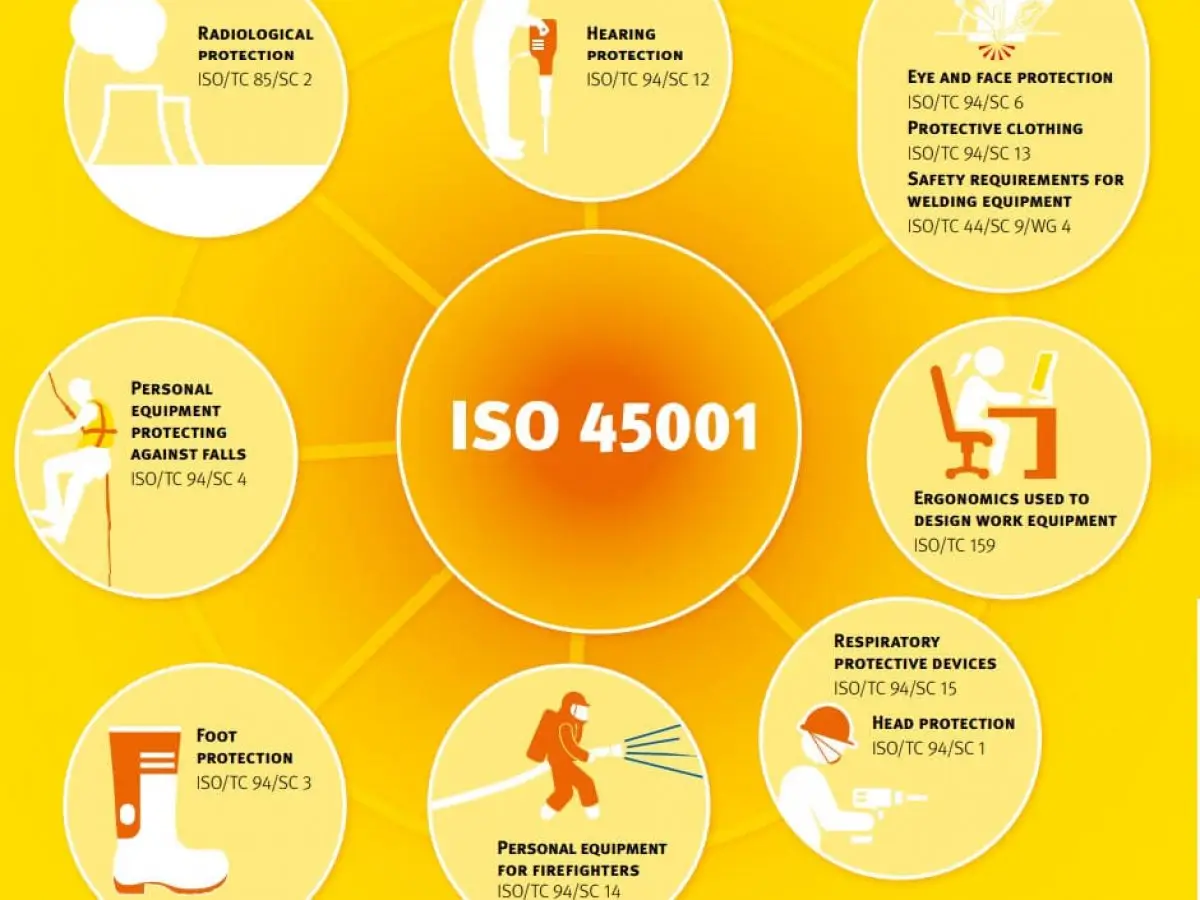
ISO 45001:2018 is the international standard for an Occupational Health and Safety Management System, usually shortened to OHSMS. It replaced the older OHSAS 18001, which was formally withdrawn in 2021, so anyone still quoting an OHSAS certificate is working from an outdated framework.
In plain terms, the standard gives you a structured way to find hazards, control them and keep improving. It asks you to put these elements in place:
- Leadership commitment: top management owns safety, rather than handing it entirely to one safety officer.
- Worker consultation and participation: the people doing the work have a real say in how risks are controlled.
- Hazard identification and risk assessment for routine and non-routine tasks.
- Legal compliance checks, so you know which laws apply and whether you meet them.
- Emergency preparedness, covering fires, spills, heat stress and medical incidents.
- Incident investigation that looks for root causes instead of just blaming the injured worker.
- Internal audits and management reviews to keep the system honest.
The full scope is summarised on ISO’s official page for ISO 45001:2018.
Why Mombasa Workplaces Face Higher Safety Pressure
Mombasa’s economy leans heavily on industries where the hazards are physical and constant. A few that come up again and again:
- Port and logistics: heavy lifting equipment, moving vehicles, container handling and working at height.
- Oil, gas and fuel storage: fire, explosion and chemical exposure risks around depots and pipelines.
- Manufacturing and EPZ factories: machinery guarding, noise, dust and repetitive strain.
- Hospitality and tourism: kitchen burns, slips around pools, manual handling and long shifts in hot conditions.
- Construction: scaffolding, excavation and falls, especially with ongoing building across the county.
Then there’s the climate. Coastal heat and humidity make heat stress and dehydration a genuine occupational hazard, not a minor comfort issue, and a good OHSMS treats it that way.
How ISO 45001 Fits With Kenyan Safety Law
Every employer in Kenya already has duties under the Occupational Safety and Health Act, 2007, enforced by the Directorate of Occupational Safety and Health Services (DOSHS). That includes registering workplaces, carrying out risk assessments, setting up safety committees where required and arranging regular safety audits.
ISO 45001 doesn’t replace any of that. What it does is give you a system that makes compliance routine rather than a scramble before an inspection:
- Your legal register lists the regulations that apply to your site, so nothing slips through.
- Risk assessments are documented and reviewed, which is exactly what inspectors ask to see.
- Training records, incident logs and audit findings sit in one place.
- Corrective actions are tracked to completion instead of being forgotten after the meeting.
Legal Compliance Alone vs ISO 45001 Certification
Plenty of Mombasa firms meet the legal minimum and stop there. Here’s how that compares with running a certified system:
| Area | Basic Legal Compliance | ISO 45001 Certified OHSMS |
|---|---|---|
| Approach | Reactive, often driven by inspections or incidents | Proactive, with hazards identified before anyone gets hurt |
| Leadership role | Safety left to one officer or HR | Top management accountable and actively involved |
| Worker involvement | Limited to the safety committee, if one exists | Structured consultation across all levels |
| Contractors | Often outside the safety process | Controlled through procurement and site rules |
| Improvement | Happens after something goes wrong | Built in through audits, reviews and measurable objectives |
| Proof for clients | Inspection reports and verbal assurances | Internationally recognised certificate from an accredited body |
The Real Benefits for Mombasa Employers
Fewer Incidents and Less Downtime
This is the obvious one, and it matters. Every serious injury means lost shifts, investigation time, possible compensation claims and a crew that’s rattled for weeks afterwards. A working OHSMS brings those numbers down over time.
Stronger Tender Applications
Shipping lines, oil majors, international hotel groups and large contractors increasingly ask suppliers for proof of a safety management system. An ISO 45001 certificate answers that question cleanly, and in some tenders it’s the difference between qualifying and not.
A Better Place to Work
- Staff feel listened to when they’re consulted on risks.
- Staff turnover tends to drop when people trust that management takes safety seriously.
- Supervisors spend less time firefighting and more time actually supervising.
- Insurers may view a certified system favourably when reviewing cover.
Don’t Forget Contractors and Casual Workers
This is where many Mombasa sites get caught out. Port operations, construction projects and hotels often rely on casual labour, subcontractors and agency staff, and these are frequently the people doing the riskiest jobs with the least training.
ISO 45001 expects you to bring them inside your safety system. In practice, that usually means:
- Checking a contractor’s safety record and competence before awarding work.
- Giving every new worker a site induction, even if they’re only there for a day.
- Issuing the right PPE and making sure it’s actually worn.
- Including contractors in incident reporting, so near misses aren’t hidden.
Get this right and you close one of the biggest gaps auditors look for.
Steps to ISO 45001 Certification in Mombasa
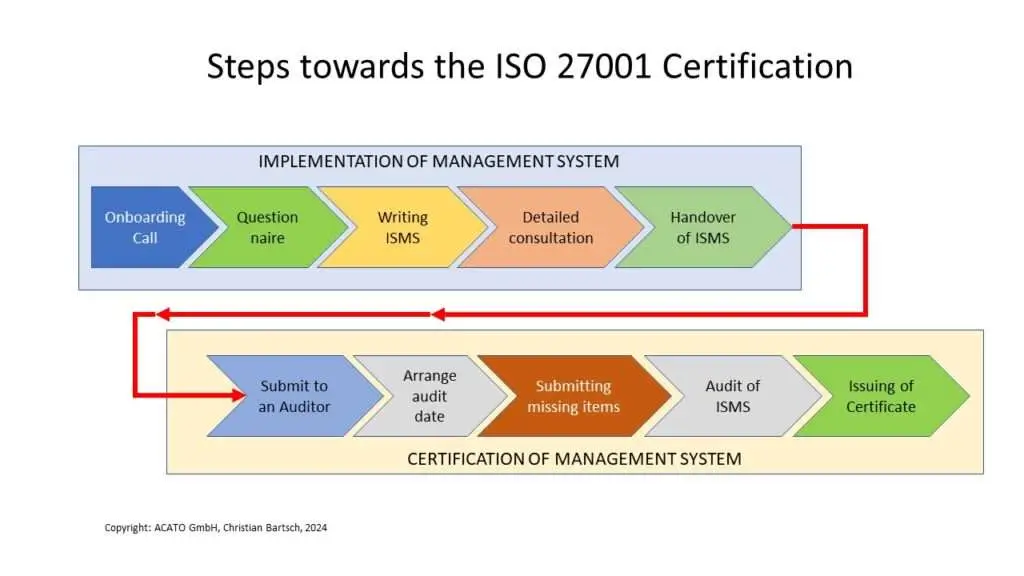
No two projects are identical, but most follow this path:
- A gap analysis comparing your current safety practices with the standard.
- Hazard identification and risk assessment across every site, shift and task.
- Writing the policy, procedures and legal register that the system needs.
- Training managers, supervisors and workers, including contractors where relevant.
- Running the system for a few months so there’s real evidence to audit.
- An internal audit and management review.
- The two-stage external audit by an accredited certification body.
If the audit side is new to you, our guide to ISO certification audit stages explains what happens at each stage. It’s also worth checking the list of documents required for ISO certification early, since missing paperwork is one of the most common causes of delay.
For budgeting, our breakdown of ISO certification cost in Kenya explains what drives the price, from company size to the number of sites covered.
Combining ISO 45001 With Other Standards
ISO 45001 uses the same high-level structure as ISO 9001 quality management and ISO 14001 environmental management. Many Mombasa organisations, particularly in port services and manufacturing, run all three as one integrated management system.
That saves real effort. You get one set of internal audits, one management review and one document control process, instead of three separate systems competing for attention.
Frequently Asked Questions
How long does ISO 45001 certification take?
Most organisations take four to six months from gap analysis to certification. Multi-site operations or businesses starting from scratch may need longer.
Is ISO 45001 mandatory in Kenya?
No, it’s voluntary. Compliance with the Occupational Safety and Health Act is mandatory, though, and ISO 45001 makes meeting those obligations far more manageable.
Is it only for large companies?
Not at all. A small clearing and forwarding firm or a boutique hotel can be certified too. The system just needs to match the size and risks of the business.
Should we use a consultant?
It isn’t required, but experienced help usually speeds things up. Working with ISO consultants in East Africa who know local regulations can save you a round of rework before the audit.
Final Thoughts
Heavy equipment, fuel, heat and long shifts are part of daily life for thousands of workers on the coast. ISO 45001 Certification Mombasa employers invest in turns safety from a set of rules on a noticeboard into a system people actually follow.
- It helps you spot and control hazards before someone gets hurt.
- It makes legal compliance under Kenyan safety law easier to prove.
- It gives clients and tender boards independent evidence that you take safety seriously.
Ready to Build a Safer Workplace?
AceQu helps organisations across Mombasa and East Africa implement and certify ISO 45001, from the first gap analysis through to the final audit and beyond. Book a free consultation and find out how close you already are.
Talk to Our ISO 45001 TeamFor a wider background on the standard’s history and adoption, see this overview of ISO 45001.