
ISO 22301 Certification Kampala: Getting Ready Before Disruption Hits
Most Kampala businesses don’t plan for disruption until it has already cost them something, whether that’s a lost day of sales, a missed delivery or an awkward call to an unhappy client. A business continuity management system built on ISO 22301 is designed to change that, so the next outage or flood becomes a problem you’ve already rehearsed.
That’s why ISO 22301 Certification Kampala searches have been climbing among banks, telecoms, manufacturers and NGOs in the city. Clients want proof that you’ll still deliver when things go sideways, and a certificate gives them exactly that.
Below, we’ll cover what the standard asks for, the disruptions Kampala organisations deal with most, and what the path to certification looks like in practice.
What ISO 22301 Is, in Plain Terms
ISO 22301:2019 is the international standard for business continuity management. It gives you a structured way to work out what could stop your organisation from operating, what must keep running no matter what, and how you’ll recover quickly when something does go wrong.
The core building blocks are fairly practical:
- Business impact analysis (BIA): ranking your activities by how much damage a stoppage would cause, and how long you could last without each one.
- Risk assessment: identifying the threats most likely to interrupt those activities.
- Continuity strategies, such as a backup site, a second supplier or a manual process for when systems are down.
- Clear written plans with named people responsible for each step.
- Regular exercises, so the plan is tested before a real incident tests it for you.
- Ongoing review by top management, feeding lessons back into the system.
The official summary is on ISO’s page for ISO 22301:2019. It applies to any organisation, whatever its size or sector.
The Disruptions Kampala Organisations Face Most
Talk to operations teams across the city and the same list keeps coming up:
- Power cuts and unstable supply, which push many firms onto generators and expensive fuel for hours at a time.
- Flash floods during the rainy seasons, when drainage channels overflow and roads in areas like Bwaise, Nakivubo and parts of the industrial area become impassable.
- Heavy traffic and road closures that can keep staff and deliveries stuck for most of a morning.
- Internet and network outages, including the national shutdown during the 2021 general election, which hit online businesses, banks and mobile money users hard.
- Fuel and import delays, since much of Uganda’s fuel and many goods arrive by road through Kenya and depend on smooth border crossings.
- Cyber attacks and fraud aimed at banking, payment and mobile money platforms.
None of these are rare events. The businesses that come through them best tend to be the ones who asked “what if?” before it happened, then wrote down and tested the answer.
Improvising can work once or twice. But it depends on who happens to be in the office that day, and it rarely holds up when two problems land at once, say a power cut during a flood week when half the staff can’t get into town. A tested plan takes that luck out of the picture.
How ISO 22301 Helps You Prepare
A lot of organisations in Kampala already have some kind of emergency plan. The trouble is that it often covers only IT backups, or it was written years ago by someone who has since left. ISO 22301 closes those gaps in a few specific ways.
You Decide Priorities Before the Crisis
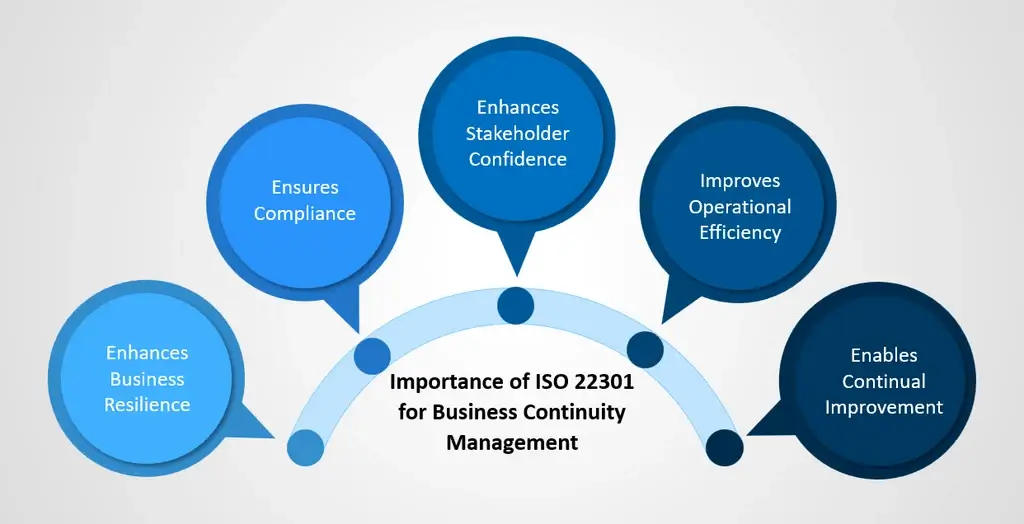
The business impact analysis forces a proper conversation about what really matters. When the power goes or the network drops, your team already knows which services come back first and which can wait until tomorrow.
Your People Know Their Roles
- Named staff own each part of the response, with deputies in case they’re unreachable.
- Contact lists, call trees and customer messages are prepared in advance.
- Exercises build muscle memory, so people don’t freeze or improvise under pressure.
Suppliers Stop Being a Blind Spot
The standard asks you to look at the partners you depend on. For many Kampala firms that means fuel suppliers, internet providers, transporters and cloud services, and deciding what you’d do if one of them let you down.
You Can Prove It to Clients and Regulators
Financial institutions supervised by the Bank of Uganda are expected to have continuity arrangements in place, and large clients, donors and international organisations increasingly ask suppliers for the same. This is where ISO 22301 Certification Kampala businesses hold becomes useful: an accredited certificate answers the question in one line of a tender response.
Basic Emergency Plan vs ISO 22301 Certified BCMS
Here’s how a typical homegrown plan compares with a certified system once you look at how each works in practice:
| Area | Basic Emergency Plan | ISO 22301 Certified BCMS |
|---|---|---|
| Who owns it | Usually one person in IT or admin | Top management accountable, with roles spread across departments |
| What it covers | Mainly data backups and fire drills | People, premises, suppliers, technology and communication |
| Recovery priorities | Worked out on the day, often under stress | Agreed in advance through a business impact analysis |
| Testing | Rarely, if ever | Planned exercises with results recorded and acted on |
| Staying up to date | Goes out of date as staff and systems change | Reviewed regularly and checked in annual surveillance audits |
| Evidence for clients | A verbal promise | Certificate from an accredited certification body |
Who in Kampala Gains the Most
Any organisation can use the standard, but some feel the pressure sooner than others:
- Banks, SACCOs, microfinance institutions and insurers, where downtime quickly becomes a regulatory issue.
- Telecoms, fintechs and mobile money agents, whose customers expect round-the-clock service.
- Hospitals, clinics and laboratories, where interruptions affect patient care directly.
- Manufacturers and logistics firms in Namanve, Nakawa and along the Jinja Road corridor.
- NGOs and suppliers to UN agencies and donors, many of whom now check continuity arrangements during procurement.
Smaller firms aren’t left out. A 30-person company won’t need the same scope as a commercial bank, and a sensible consultant will size the system to fit your actual operations.
The Path to Certification, Step by Step
Every project differs a little, but most follow this order:
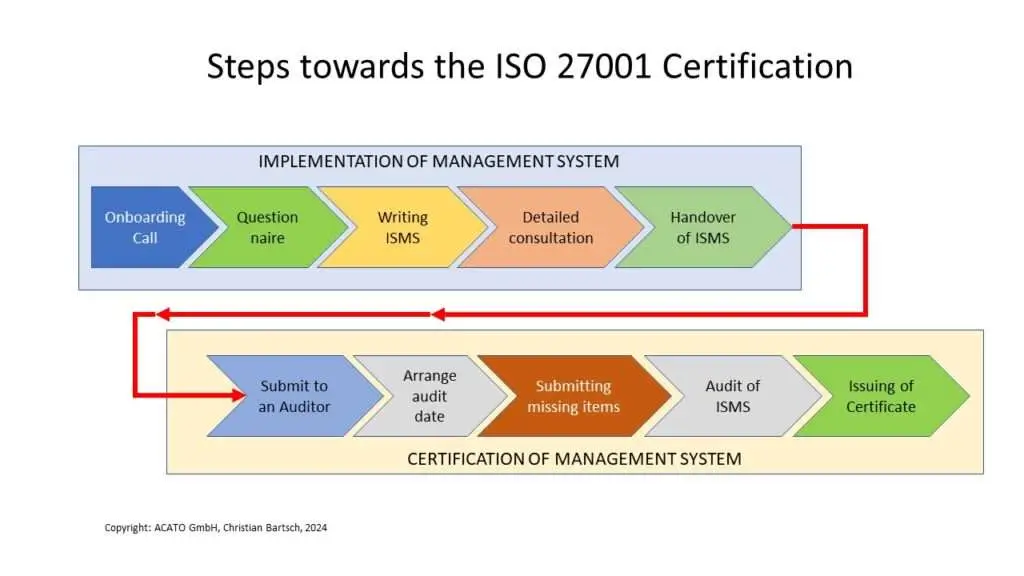
- A gap analysis comparing your current arrangements with the standard.
- A business impact analysis and risk assessment based on how you really operate.
- Continuity strategies and written plans for your most important activities.
- Staff training and at least one exercise to test those plans.
- An internal audit and a management review.
- A two-stage external audit by an accredited certification body.
If the audit part feels unfamiliar, our guide to ISO certification audit stages walks through what happens at each stage. It also helps to check the list of documents required for ISO certification early on, because missing paperwork is one of the most common causes of delay.
For organisations working with support across the region, our page on ISO consultants in East Africa explains how we help teams in Uganda and neighbouring countries.
It Fits Alongside Other ISO Standards
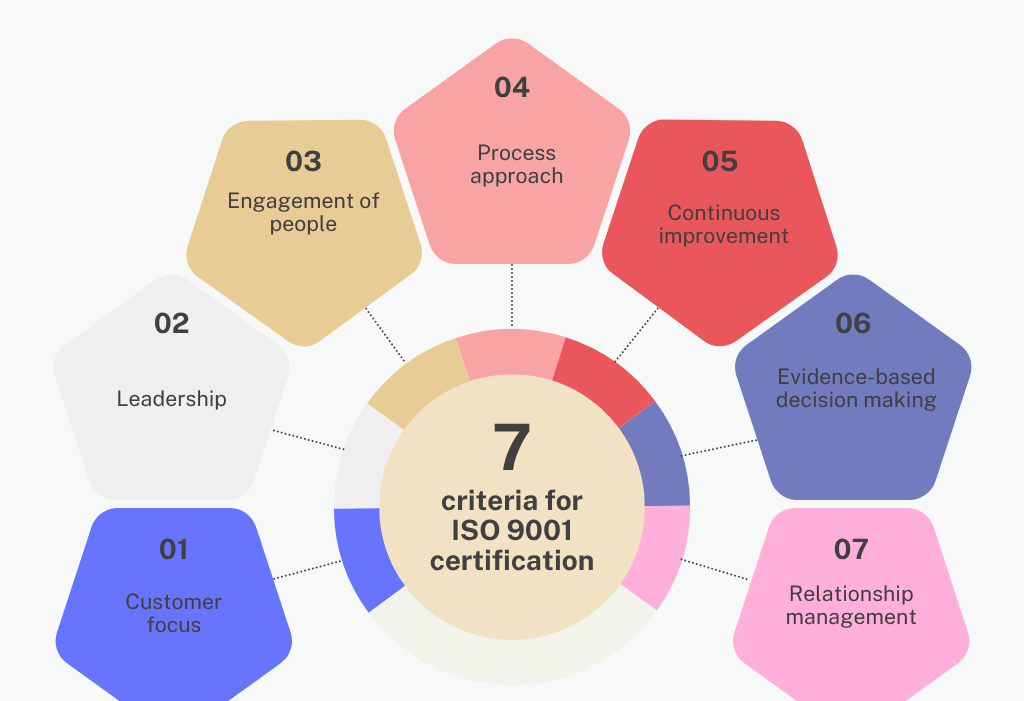
ISO 22301 uses the same high-level structure as ISO 9001 quality management and ISO 27001 information security. If you already hold either one, your document control, internal audits and management reviews carry straight over.
The link with information security is especially close, since backups, incident response and supplier controls appear in both. Many organisations choose to run the two as one integrated system rather than maintaining separate sets of paperwork.
Frequently Asked Questions
How long does ISO 22301 certification take?
Most projects run for about four to six months from gap analysis to the certification audit. Organisations with an existing ISO management system usually get there faster.
Is ISO 22301 compulsory in Uganda?
No, it’s voluntary. That said, regulators, donors and large clients increasingly expect evidence of continuity planning, and certification is the clearest way to show it.
Do we need outside help?
It’s possible to do it alone, but experienced guidance tends to save time and rework. Our article on why hiring ISO consultants can speed up certification explains where that support makes the biggest difference.
Final Thoughts
Power cuts, floods and network outages will keep happening in Kampala. What you can control is how ready you are when they do. ISO 22301 Certification Kampala organisations invest in turns a loose emergency plan into a tested, audited system that clients and regulators can rely on.
- You settle recovery priorities long before a crisis.
- You give clients and tender boards independent proof that you can deliver.
- You can build on ISO 9001 or ISO 27001 if you already hold them.
Ready to Make Your Organisation Disruption-Ready?
AceQu helps organisations in Kampala and across East Africa build, test and certify ISO 22301 business continuity systems, from the first gap analysis to the final audit. Book a free consultation and find out how prepared you really are.
Talk to Our ISO 22301 TeamFor wider background on the discipline, see this overview of business continuity planning.