

ISO 45001 Certification Nairobi: Where a Real Safety Culture Begins
Walk onto almost any site in Industrial Area and you’ll find a safety poster somewhere near the entrance. Whether anyone reads it is another matter. For a growing number of employers, ISO 45001 Certification Nairobi is how they close that gap, turning good intentions into a structured occupational health and safety management system that people actually follow.
Safety culture sounds like a soft idea until someone gets hurt. Then it becomes very concrete: lost workdays, an inspection from the labour office, a nervous client asking questions and a team that no longer trusts the process.
Below, we’ll look at what ISO 45001 really asks of an organisation, how it shifts behaviour on the ground, and what the certification journey looks like for a Nairobi business.
What ISO 45001 Actually Asks You to Do
ISO 45001:2018 is the international standard for occupational health and safety (OH&S) management systems. It replaced the older OHSAS 18001 and follows the same high-level structure as other modern ISO standards.
In plain terms, it expects you to:
- Have leaders who take visible ownership of safety, not just sign the policy.
- Identify hazards across your operations and assess the risks they create.
- Know which legal requirements apply to you and check that you meet them.
- Consult and involve workers, including those who aren’t in management.
- Put controls in place, starting with removing the hazard altogether wherever possible.
- Investigate incidents and near misses, then fix the root cause.
- Monitor performance, audit the system and keep improving it.
The official summary is on ISO’s page for ISO 45001:2018 if you’d like to see the scope in the standard’s own words.
Why Safety Culture Matters So Much in Nairobi
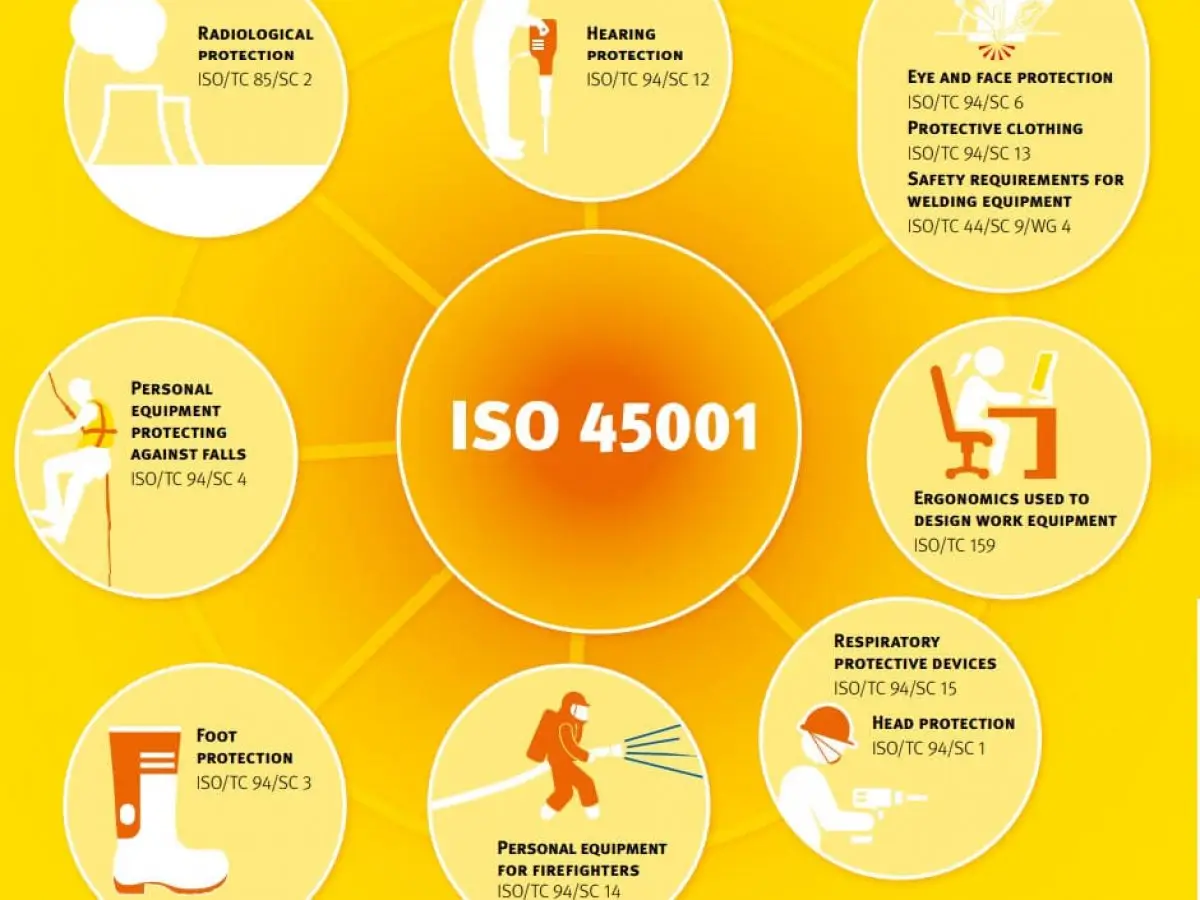
Nairobi’s economy mixes heavy and light risk in the same few kilometres. A single business park might hold a warehouse with forklifts, an office full of desk workers and a canteen with gas cylinders.
Common hazards we see across the city include:
- Construction work at height, from new apartment blocks in Kilimani to road projects on the bypasses.
- Machinery, noise and chemical exposure in manufacturing plants along Mombasa Road and in Athi River.
- Forklift and manual handling injuries in warehouses and logistics hubs near JKIA.
- Road risk for delivery riders, drivers and field sales teams in heavy traffic.
- Fire and electrical risk in older buildings with overloaded wiring.
- Stress, fatigue and poor ergonomics in offices, BPOs and call centres.
On top of that, Kenya’s Occupational Safety and Health Act, 2007 places clear duties on employers, from risk assessments to safety committees in larger workplaces. The Directorate of Occupational Safety and Health Services (DOSHS) enforces it, and inspectors can issue improvement or prohibition notices.
ISO 45001 doesn’t replace those legal duties. What it gives you is a system for meeting them consistently, rather than scrambling each time an inspector calls.
How ISO 45001 Changes Behaviour on the Ground
A certificate on the wall doesn’t make anyone safer by itself. The value comes from the habits the standard forces you to build, and auditors check those habits every year.
Leadership Shows Up
The standard puts accountability on top management, not only on the safety officer. When a director walks the floor, asks about near misses and funds a fix quickly, staff notice. That’s usually when reporting starts to improve.
Workers Get a Real Voice
ISO 45001 requires consultation and participation of non-managerial workers. In practice, that means:
- Safety committees that meet regularly and see their suggestions acted on.
- Toolbox talks where staff can raise concerns without fear of blame.
- Workers helping to write the procedures they’ll be following.
- Easy ways to report hazards, including in Kiswahili where that helps.
Near Misses Stop Being Ignored
Most serious incidents are preceded by several near misses that nobody wrote down. A working OH&S system treats each one as free information. You learn the lesson without anyone going to hospital.
Contractors Are Brought Into the Fold
Plenty of Nairobi sites rely on casual labour and subcontractors. The standard expects you to manage their risks too, through inductions, clear rules and checks before work starts.
Basic Compliance vs an ISO 45001 Safety Culture
Here’s how the two approaches usually compare once you look past the paperwork:
| Area | Basic Legal Compliance | ISO 45001 Certified System |
|---|---|---|
| Who owns safety | Mostly the safety officer or HR | Top management, with defined roles at every level |
| Approach to risk | Reactive, often after an incident or inspection | Proactive hazard identification and planned controls |
| Worker involvement | Limited to training sessions | Structured consultation and participation |
| Near misses | Rarely recorded | Reported, investigated and used to prevent harm |
| Contractors | Left to manage themselves | Included through inductions and site controls |
| Improvement | Stops once the minimum is met | Internal audits, management review and annual surveillance audits |
| Proof for clients | Policy documents and a registration certificate | Internationally recognised certificate from an accredited body |
The Business Case Beyond Safety
Protecting people is the main reason to do this. Still, the commercial benefits are real and they tend to win over finance directors:
- Fewer lost workdays and less overtime spent covering absent staff.
- Lower exposure to penalties, legal claims and work injury compensation disputes.
- A stronger hand in tenders, since many government, mining, energy and multinational clients ask for ISO 45001.
- Better staff retention, because people stay where they feel looked after.
- A clearer conversation with insurers when you can evidence your controls.
For many Nairobi contractors, the tender point alone justifies the effort. It’s increasingly common to see ISO 45001 listed as a mandatory requirement rather than a bonus.
What the Road to Certification Looks Like
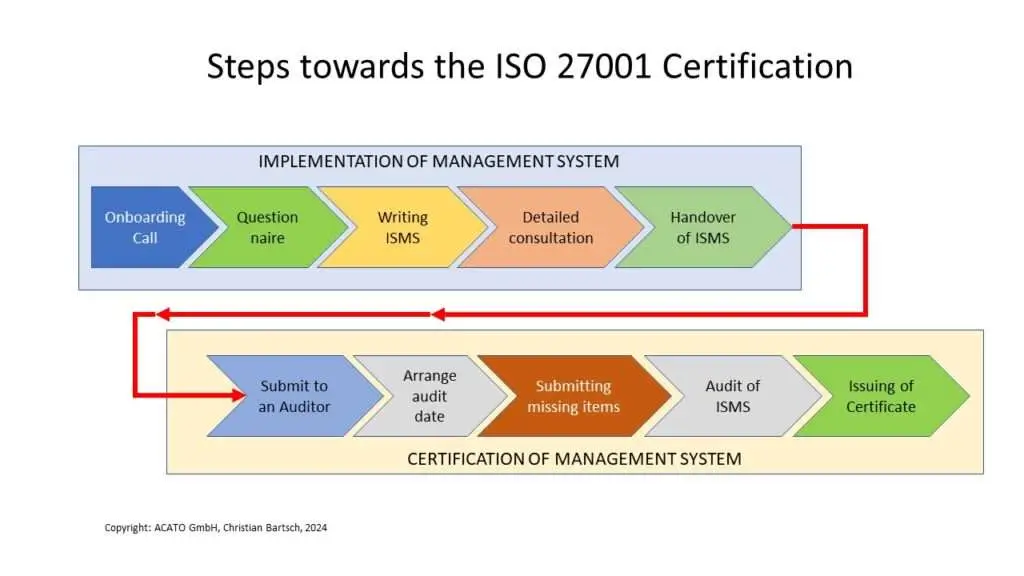
Every organisation is different, but most ISO 45001 projects follow a similar path:
- A gap analysis against the standard and the Occupational Safety and Health Act.
- Hazard identification and risk assessment across every site and activity.
- Writing the OH&S policy, objectives, procedures and emergency plans.
- Training managers, supervisors and workers, then running the system for a few months.
- An internal audit and management review to confirm it’s working.
- The two-stage external audit by an accredited certification body.
Our guide to ISO certification audit stages explains what happens at Stage 1 and Stage 2. It’s also worth reviewing the documents required for ISO certification early, since missing records are the most common reason for delays.
If budget is the next question, our breakdown of ISO certification cost in Kenya covers the factors that move the price, such as headcount, number of sites and how mature your current system is.
Common Mistakes to Avoid
We’ve seen plenty of Nairobi firms stumble on the same few points when pursuing ISO 45001 Certification Nairobi:
- Copying a template manual that doesn’t match how the site really works.
- Leaving the whole project to one safety officer with no management support.
- Forgetting casual workers and contractors in risk assessments.
- Rushing to the audit before the system has run long enough to produce records.
It Fits With the Standards You May Already Hold
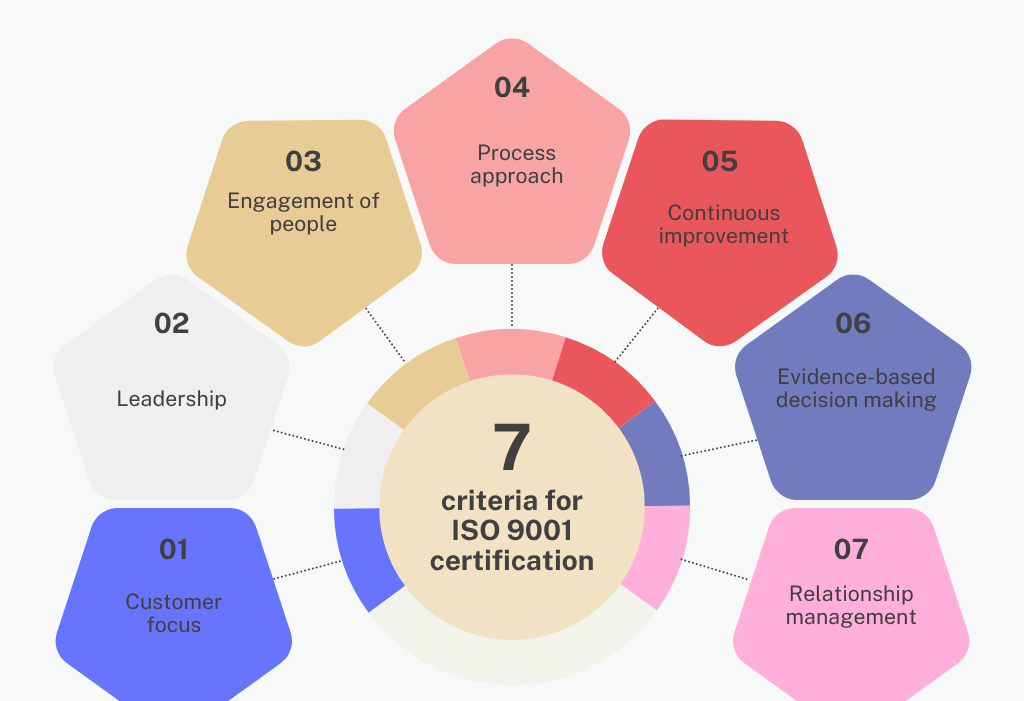
ISO 45001 shares its structure with ISO 9001 quality management and ISO 14001 environmental management. Many Nairobi manufacturers and contractors combine all three into one integrated management system, with shared audits, one document control process and a single management review.
That approach saves time, and it stops safety from becoming a separate world that only one department cares about.
Frequently Asked Questions
Is ISO 45001 mandatory in Kenya?
No. Compliance with the Occupational Safety and Health Act is mandatory, but ISO 45001 certification is voluntary. Many clients and tender boards now expect it, though.
How long does ISO 45001 certification take?
Most organisations take around four to six months, depending on size, number of sites and existing safety practices. Businesses already certified to ISO 9001 or ISO 14001 often move faster.
Is it only for construction and manufacturing?
Not at all. Offices, hospitals, schools, hotels and logistics firms use it too. The system is scaled to your actual risks, so a small office won’t face the same demands as a quarry.
Do we need a consultant?
You can go it alone, but guidance often saves months of rework. Our article on why hiring ISO consultants can speed up certification explains where outside help makes the biggest difference.
Final Thoughts
A strong safety culture is built through daily habits, honest reporting and leaders who follow through. ISO 45001 Certification Nairobi gives those habits a framework that’s checked independently every year, so they don’t fade after the first push.
- It moves safety from the safety officer’s desk to the whole organisation.
- It helps you meet Kenyan legal duties with less last-minute scrambling.
- It gives clients and tender boards proof that you take worker safety seriously.
Ready to Build a Safer Workplace?
AceQu helps organisations across Nairobi and East Africa plan, implement and certify ISO 45001 occupational health and safety systems, from the first gap analysis to the final audit. Book a free consultation and find out where your current safety arrangements stand.
Talk to Our ISO 45001 TeamFor more background on the standard’s history and adoption, see this overview of ISO 45001.