
ISO 22301 – Business Continuity Management System Certification in Kenya
When a flood cuts off your office, ransomware locks your systems or a key supplier goes quiet overnight, the only question that matters is whether your business can keep running. That is exactly what ISO 22301 – Business Continuity Management System (BCMS) Certification in Kenya addresses. It is not a policy document you file and forget. It is a working management system that tells your people, your clients, and your regulators that your organisation can take a hit and keep functioning.
This guide covers what the standard requires, which sectors in Kenya need it most urgently, how the certification process works, and what it costs to get there — all without the jargon.
What ISO 22301 Actually Requires
ISO 22301:2019 is the international standard for Business Continuity Management Systems. It sets out the requirements your organisation must meet to demonstrate that it can continue delivering products and services during disruptions — and recover efficiently afterwards.
The standard is built around a core cycle: understand the context of your organisation, plan for risks, implement controls, test them, and then improve continuously. In practice, this means your organisation must:
- Identify the activities, processes, and resources that are critical to operations
- Assess the risks and threats that could disrupt those activities
- Define the maximum tolerable period of disruption for each critical function
- Build documented recovery plans with clear roles, timelines, and escalation procedures
- Test those plans through exercises and simulations — not just write them down
- Maintain and improve the system through internal audits and management reviews
What the standard does not do is tell you exactly how to structure your plans. That flexibility is intentional. A bank’s continuity requirements are very different from a logistics company’s. ISO 22301 provides the framework; your consultants and internal teams supply the detail.
Why Kenyan Organisations Need ISO 22301 Now
Kenya’s economy is growing fast, but that growth brings exposure. Businesses are more connected, more dependent on technology, and more integrated into global supply chains than they were a decade ago. Each of those connections is also a potential point of failure.
The risks that make ISO 22301 particularly relevant for Kenyan organisations right now include:
- Cyber threats — Kenya has seen a significant rise in ransomware and data breach incidents targeting financial institutions and public sector bodies
- Infrastructure instability — power outages, flooding in Nairobi and coastal regions, and road network disruptions affect operations directly
- Regulatory pressure — sectors like banking and telecoms face increasing requirements from regulators to demonstrate operational resilience
- International contract requirements — more global procurement processes require suppliers to hold ISO 22301 or equivalent continuity certifications
- Reputational risk — clients and partners increasingly assess supplier resilience before committing to long-term relationships
For an organisation that relies on its reputation with international clients, having ISO 22301 certification is often the difference between winning a tender and being eliminated at the first shortlisting stage.
ISO 22301 vs ISO 9001: Understanding the Difference
A question that comes up often: if we already have ISO 9001, do we need ISO 22301? The short answer is that they cover different things — but they work well together.
| Standard | Focus | Core Question It Answers | Integrated? |
|---|---|---|---|
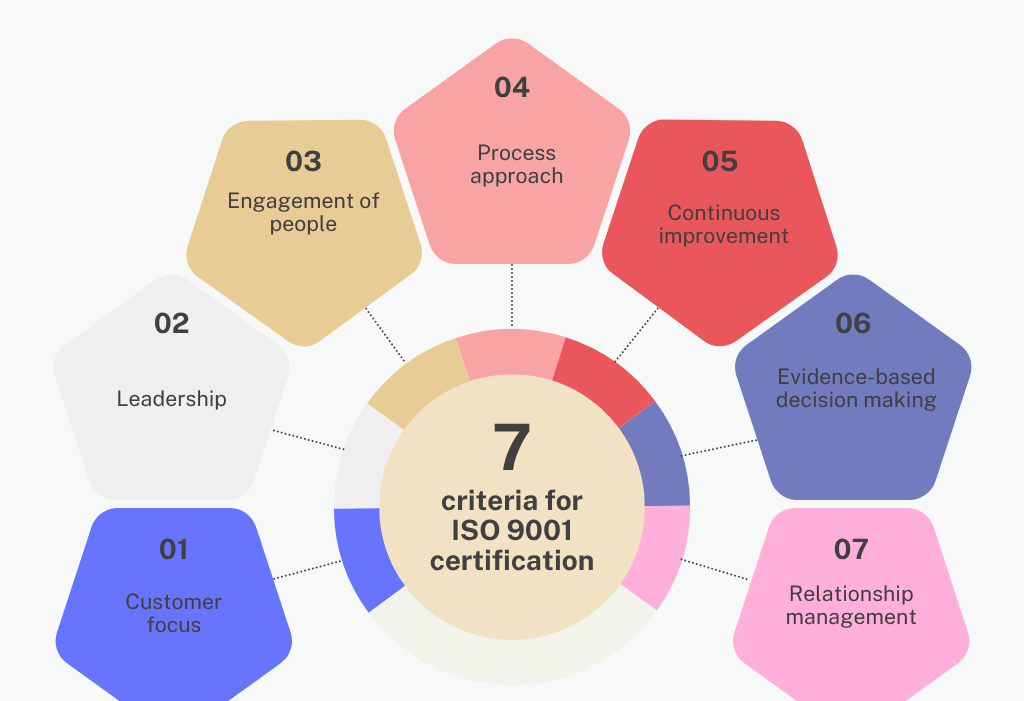
| ISO 9001:2015 | Quality Management System (QMS) | Are we delivering consistently and to the right standard? | ✔ Yes |
| ISO 22301:2019 | Business Continuity Management System (BCMS) | Can we keep operating when something goes seriously wrong? | ✔ Yes |
| ISO 14001:2015 | Environmental Management System | Are we managing our environmental impact responsibly? | ✔ Yes |
| ISO 27001:2013 | Information Security Management System | Is our data and IT infrastructure properly protected? | ✔ Yes |
All four standards share the same High Level Structure (HLS), which means the policies, objectives, and management review processes can be aligned across them. Organisations that already hold ISO 9001 certification or ISO 14001 certification in Kenya will find that a significant portion of the groundwork for ISO 22301 is already in place.
📎 Not sure whether to use a consultant or go direct to a certification body? Read our guide: ISO consultant vs certification body — what is the difference?
Which Industries in Kenya Need ISO 22301 Most?
Technically, any organisation that cannot afford to stop operating can benefit from ISO 22301. In practice, certain sectors face the most acute need — either because of regulatory pressure, the nature of their operations, or the expectations of their clients.
Banking & Financial Services
Regulatory requirements from the Central Bank of Kenya increasingly reference operational resilience standards. Customer-facing services cannot tolerate extended downtime.
Telecommunications & ICT
Uptime is the product. Cyber incidents and system failures are existential risks. ISO 22301 provides the framework to manage both.
Healthcare
When systems fail in a hospital, patient safety is at risk. Continuity planning is a clinical and ethical obligation, not just a commercial one.
Logistics & Supply Chain
Global supply chain partners increasingly require ISO 22301 as a condition of contract. A disruption at one node can cascade across a network.
Manufacturing
Production halts carry direct financial penalties. A BCMS identifies which production lines are critical and prioritises their recovery.
Government & Public Sector
Essential services have a duty of continuity. ISO 22301 provides a recognised standard for demonstrating that duty is being met.
How Much Does ISO 22301 Certification Cost in Kenya?
There is no single answer to this, and anyone who gives you a firm number without understanding your organisation first is guessing. The honest factors that affect cost are:
- The size and complexity of your organisation
- The number of sites and locations in scope
- How much documentation and process maturity already exists
- Whether you are integrating with other ISO standards (which reduces overall cost)
- The certification body chosen for the final audit
What AceQu commits to is transparent, itemised pricing with no hidden charges. Organisations that work with experienced ISO consultants in East Africa typically reach certification faster and with fewer costly revision cycles than those who attempt implementation without specialist support. See our full guide to ISO certification cost in Kenya for a breakdown of what goes into the total.
Frequently Asked Questions
How long does ISO 22301 certification take in Kenya?
Typically 3–6 months, depending on your organisation’s size, existing documentation, and readiness. With experienced ISO consultants supporting the process, the timeline can often be compressed. Organisations with existing ISO 9001 or ISO 14001 systems in place tend to move faster.
Is ISO 22301 certification mandatory in Kenya?
It is not legally mandatory, but it is strongly recommended — and increasingly required — for organisations in banking, ICT, healthcare, and logistics that bid for enterprise or government contracts. Some international procurement frameworks treat it as a minimum standard.
Can ISO 22301 be integrated with ISO 9001 or ISO 14001?
Yes. ISO 22301 uses the same High Level Structure as ISO 9001 and ISO 14001, which means the standards integrate cleanly. Many organisations run them together, sharing documentation frameworks, internal audit processes, and management reviews — which reduces duplication and overall cost.
Is Your Business Ready for Disruption?
AceQu guides organisations across Kenya and East Africa through ISO 22301 certification, from the first gap analysis to the final audit. Book a free consultation and find out how ready your business really is.
Talk to Our ISO 22301 TeamFor the standard’s own description, see ISO’s page on ISO 22301:2019.