
ISO 22301 Certification Kampala: Why Continuity Plans Need More Than Good Intentions
Most Kampala businesses already have some idea of what they’d do if things went wrong. The trouble starts when “some idea” meets a real outage, a flooded access road or a supplier stuck at Malaba. That’s usually when leadership teams start talking to experienced ISO consultants in East Africa about putting something sturdier in place.
ISO 22301 certification in Kampala gives that “something sturdier” a proper shape. It’s the international standard for business continuity, and it turns a loose set of good intentions into a tested, audited system your clients and regulators can actually check.
Below, we’ll cover what the standard asks for, the disruptions Kampala organisations face most often, and how certification helps you build continuity plans that hold up when they’re needed.
What ISO 22301 Actually Asks You to Do
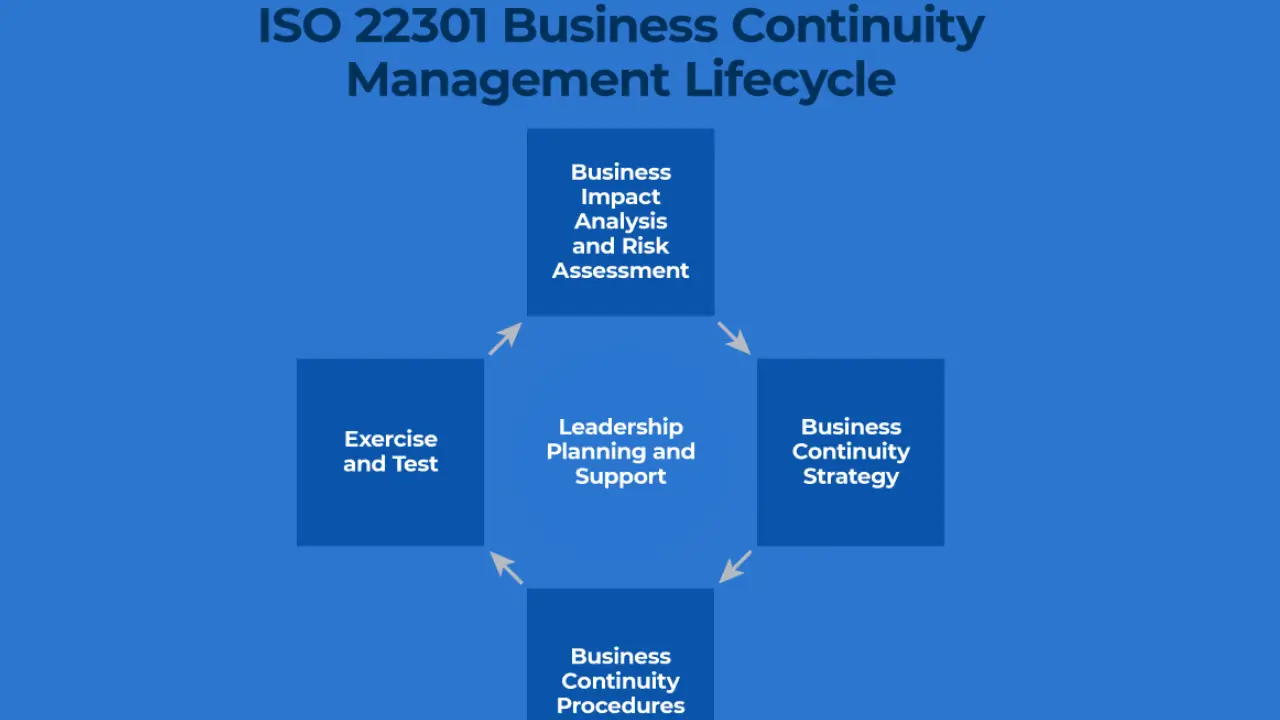
ISO 22301:2019 sets out the requirements for a Business Continuity Management System, usually shortened to BCMS. Put simply, it’s a structured way to decide what your organisation can’t afford to lose, how long it can cope without it, and how you’ll get it back.
The main building blocks are:
- Business impact analysis (BIA): ranking your activities by importance and setting realistic recovery times for each one.
- Risk assessment: looking honestly at the threats most likely to interrupt those activities.
- Continuity strategies, such as a backup site, a second supplier, spare equipment or a manual process that works when the system doesn’t.
- Written plans with named people, so nobody wastes the first hour of an incident asking who’s in charge.
- Exercises and tests that show whether the plans work outside a meeting room.
- Management review and improvement, so every test and every real incident makes the system a little better.
The full summary sits on ISO’s official page for ISO 22301:2019, and you can see how we support it on our ISO 22301 business continuity management system page.
The Disruptions Kampala Organisations Plan Around
Every city has its own risk profile. In Kampala, a handful of problems come up again and again when we sit down with clients:
- Power cuts and load shedding, which quickly expose how much a business really depends on one generator and one fuel supplier.
- Flash floods after heavy rain, especially in low-lying areas where roads, warehouses and ground-floor offices can be out of action for days.
- Internet and network disruptions, including the nationwide shutdown around the 2021 general election that left many firms offline.
- Mobile money and banking platform outages, which hit sales and payroll for businesses that rely on MTN MoMo or Airtel Money.
- Supply chain delays along the Northern Corridor, as most imported goods travel from Mombasa through Malaba or Busia before reaching Kampala.
- Cyber incidents and ransomware, now a real concern for SACCOs, schools and mid-sized companies as well as banks.
None of these are rare events, and several can happen in the same month. A continuity plan that only covers “the server goes down” leaves a lot of ground uncovered.
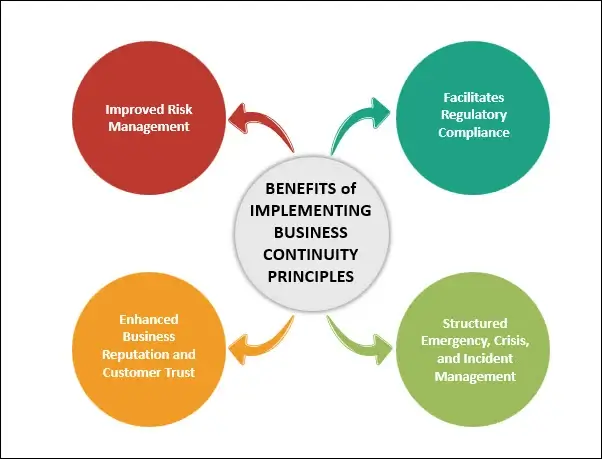
How ISO 22301 Builds Stronger Business Continuity Plans
Many plans fail for boring reasons. They’re out of date, nobody’s tested them, or they only cover IT. The standard is designed to close exactly those gaps.
Priorities Are Agreed Before the Crisis
The business impact analysis forces a conversation most teams avoid. Which service comes back first? How many hours can customers wait? Settling that in a calm meeting beats arguing about it while the phones are ringing.
The Whole Business Is Covered
A certified BCMS looks well beyond the server room. It considers:
- People, including who can work remotely and who needs to be on site.
- Premises, including where you’d operate if your building became inaccessible.
- Suppliers, particularly those you can’t easily replace.
- Communication with staff, customers and regulators during an incident.
Plans Get Tested, Not Just Written
Exercises reveal the awkward details early. The backup generator that nobody knows how to start. The emergency contact list full of old numbers. Finding those in a drill is far cheaper than finding them during a real outage.
Traditional Disaster Recovery vs an ISO 22301 BCMS
Plenty of Kampala firms already have a disaster recovery arrangement for IT. Here’s how that compares with a certified continuity system:
| Area | Traditional IT Disaster Recovery | ISO 22301 Certified BCMS |
|---|---|---|
| Focus | Restoring servers, data and systems | Keeping the whole business running, including people and suppliers |
| Who owns it | Usually the IT team alone | Top management, with roles across every department |
| Recovery priorities | Based on technical dependencies | Based on business impact and customer commitments |
| Testing | Backup restores, if and when time allows | Scheduled exercises covering realistic scenarios |
| Supplier risk | Rarely considered | Critical suppliers identified and assessed |
| External proof | Internal documents only | Certificate from an accredited body, checked in yearly surveillance audits |
Why Certification Carries Weight in Uganda
You can follow ISO 22301 without getting certified. Many organisations still choose the certificate, and the reasons are mostly practical.
- Tenders and supplier registers: international NGOs, development partners and oil and gas contractors increasingly ask suppliers how they’ll keep services going during a disruption.
- Regulator expectations: institutions supervised by the Bank of Uganda are expected to maintain continuity arrangements, and insurers and pension schemes face similar questions.
- Client confidence, because a certificate is easier to trust than a verbal promise.
- Internal discipline, since yearly surveillance audits stop the plan from quietly going stale.
There’s also the question of reach. The ISO 22301 certification Kampala firms earn is recognised internationally, so the same certificate that satisfies a local bank can also reassure a partner in Nairobi, Dubai or London. For businesses trying to grow beyond Uganda, that portability is often the deciding factor.
Who Benefits Most in Kampala
The standard fits any size or type of organisation. These sectors tend to see the value fastest:
- Banks, SACCOs and microfinance institutions serving members who expect access every day.
- Telecoms, fintechs and payment providers where minutes of downtime affect thousands of users.
- Manufacturers in Namanve and the Nakawa industrial area with tight production schedules.
- Hospitals, private clinics and laboratories.
- Logistics firms moving goods along the Northern Corridor and through Entebbe.
- Suppliers to the oil and gas sector, NGOs and UN agencies, where continuity evidence often forms part of pre-qualification.
The Certification Journey, Step by Step
Most projects follow a similar path, though the pace depends on your size and starting point:
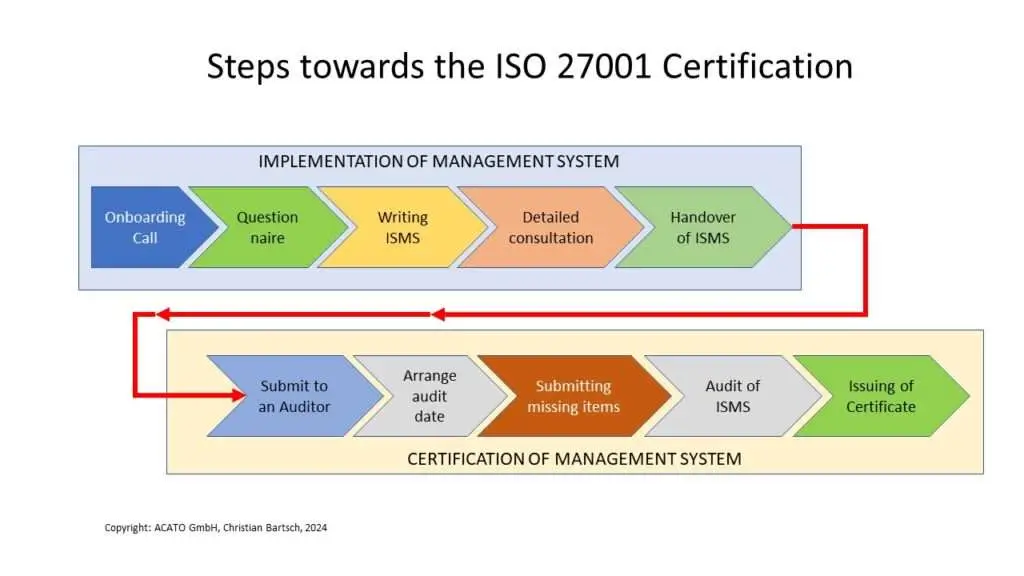
- A gap analysis against the requirements of ISO 22301.
- A business impact analysis and risk assessment built around your real operations.
- Continuity strategies and documented plans for your priority activities.
- Training for staff and at least one full exercise.
- An internal audit followed by a management review.
- A two-stage certification audit by an accredited certification body.
Our guide to ISO certification audit stages explains what the auditor looks for at each stage. Before you begin, the checklist of documents required for ISO certification is a useful way to see what you already have and what’s missing.
If you’re still deciding who should support the project, our article on the ISO consultant vs certification body question explains the difference between the two roles.
Linking ISO 22301 With Your Other Standards
ISO 22301 uses the same high-level structure as ISO 9001 quality management and ISO 27001 information security. Organisations that already hold either one can reuse much of their existing documentation, internal audit routine and management review process.
Pairing continuity with information security makes particular sense. Both standards deal with backups, incident response and supplier risk, so running them as one integrated system saves effort and avoids duplicate paperwork.
Frequently Asked Questions
How long does ISO 22301 certification take in Kampala?
Most organisations need around four to six months from gap analysis to the certification audit. Having another ISO standard in place usually shortens that.
Is ISO 22301 compulsory in Uganda?
No, it’s voluntary. Even so, regulators, large clients and tender boards increasingly expect clear evidence of continuity planning.
Is it only for large companies?
Not at all. The scope can be sized to fit a 30-person firm just as well as a national bank.
Final Thoughts
Power cuts, floods and system outages will keep testing Kampala businesses. For organisations weighing up ISO 22301 certification, Kampala offers plenty of reasons to act sooner rather than later, and the payoff is a continuity plan you’ve tested rather than one you’re hoping will work.
- It sets recovery priorities before a crisis arrives.
- It covers people, premises and suppliers as well as IT.
- It gives clients and regulators independent proof that you’re prepared.
Ready to Build a Continuity Plan That Holds Up?
AceQu supports organisations across Kampala and East Africa with ISO 22301 gap analysis, implementation and certification support. Book a free consultation and we’ll show you where your current plans stand and what it takes to get certified.
Talk to Our ISO 22301 TeamFor wider background on the discipline, see this overview of business continuity planning.