
ISO 27001 Certification Mombasa: Why Local Businesses Are Taking It Seriously
A clearing agent in Mombasa handles bills of lading, client ID copies, bank details and customs entries before most people have finished their morning chai. If that data leaks, or gets locked up by ransomware, the damage lands on your clients as much as on you. That’s the problem ISO 27001 information security management was written to solve.
Around the port, along the tourist coast and in the city’s growing finance sector, clients now ask harder questions about how their information is protected. A verbal “we take security seriously” doesn’t close those conversations any more. A certificate usually does.
That’s why interest in ISO 27001 certification in Mombasa has grown so quickly over the past few years, especially among firms that deal with overseas partners. Below, we’ll cover what the standard involves, why Mombasa firms face particular risks, and what getting certified actually looks like.
What ISO 27001 Actually Is
ISO 27001 sets out the requirements for an Information Security Management System, or ISMS. It isn’t a piece of software or a firewall. It’s a documented, repeatable way of finding your information risks and putting sensible controls around them.
The standard protects three things, often called the CIA triad:
- Confidentiality: only the right people can see sensitive information.
- Integrity: records stay accurate and nobody tampers with them.
- Availability: systems and data are there when your team needs them.
If you’d like the longer explanation, our guide on what ISO 27001 is and how it works goes through the standard in more detail.
Why Mombasa Businesses Face Higher Information Risk
Mombasa’s economy runs on trade, travel and money moving between many hands. That’s good for business, and it also means sensitive data passes through a lot of systems, inboxes and suppliers. The most common weak spots we see include:
- Shipping, clearing and freight firms sharing cargo, customs and client records with several parties every day.
- Hotels and tour operators on the coast storing guest passports, booking details and card payments.
- Banks, SACCOs and insurers holding personal and financial data that fraudsters actively target.
- Hospitals and clinics keeping patient records that are both sensitive and hard to replace.
- Phishing emails, fake invoices and SIM swap fraud aimed at finance teams.
- Suppliers and IT contractors with remote access that nobody has reviewed in months.
Most of these risks aren’t exotic. They’re everyday gaps that only become visible after something goes wrong, which is exactly what a structured ISMS is meant to prevent.
The Data Protection Act Raises the Stakes
Kenya’s Data Protection Act, 2019 puts clear duties on any organisation that collects or processes personal data. Data controllers and processors may need to register with the Office of the Data Protection Commissioner, and serious failures can lead to penalties of up to KES 5 million or 1% of annual turnover, whichever is lower.
ISO 27001 doesn’t replace legal advice, but many of its controls (access management, incident response, supplier checks) line up closely with what the Act expects. That makes compliance far easier to demonstrate.
What Certification Really Does for Your Business
Plenty of companies have antivirus, backups and a password policy. Certification is different because an independent auditor checks that your controls work in practice, and keeps checking every year.
It Wins Contracts and Tenders
International shipping lines, European tour operators, banks and government bodies increasingly ask suppliers for proof of information security. An ISO 27001 certificate answers that question in one line of a tender document, and it can be the difference between making the shortlist and missing it.
It Reduces the Chance of a Costly Breach
- Risks are assessed on purpose, rather than discovered during an incident.
- Staff get regular training, so phishing emails are more likely to be reported than clicked.
- Access rights are reviewed, so former employees and old suppliers lose access on time.
- You have an incident plan, which means faster decisions and less damage if something does slip through.
It Builds Trust You Can Point To
Customers rarely read your security policy. They do recognise an internationally accepted certificate from an accredited body, and that gives them a reason to choose you over a competitor who can only offer reassurances.
Basic IT Security vs ISO 27001 Certification
Here’s how a typical “we’ve got it covered” approach compares with a certified ISMS:
| Area | Basic IT Security | ISO 27001 Certified ISMS |
|---|---|---|
| Ownership | Left to the IT person or an outside vendor | Top management accountable, with roles across the business |
| Scope | Mainly devices, antivirus and firewalls | People, processes, suppliers, premises and technology |
| Risk management | Reactive, usually after an incident | Formal risk assessment with a documented treatment plan |
| Staff awareness | Occasional reminders, if any | Planned training with records kept |
| Data protection compliance | Hard to prove to regulators or clients | Documented controls that support the Data Protection Act |
| Proof for clients | “Trust us, our systems are safe” | Accredited certificate checked in yearly surveillance audits |
Which Mombasa Organisations Benefit Most
The standard fits any organisation, whatever its size. Some sectors in the city simply feel the pressure sooner:
- Clearing and forwarding agents, shipping lines and freight companies working around the port.
- Hotels, resorts and tour operators from Nyali to Diani handling foreign guests’ data.
- Banks, SACCOs, microfinance lenders and insurance companies.
- Hospitals, diagnostic labs and pharmacies.
- Manufacturers and exporters in the Export Processing Zones supplying overseas buyers.
- IT service providers, BPOs and software firms whose clients expect proof of security.
Smaller firms shouldn’t rule themselves out. A 30-person agency doesn’t need the same setup as a bank, and a good consultant will scale the system to fit.

Common Mistakes to Avoid
We see the same few slip-ups again and again when firms start their first ISMS:
- Treating it as an IT project, when half the controls involve HR, finance and operations.
- Copying policy templates that don’t match how the business actually runs.
- Setting the scope too wide at the start, which slows everything down.
- Skipping staff training, then wondering why the same phishing emails keep working.
- Forgetting that certification is ongoing, with surveillance audits every year.
Getting these right early saves weeks of rework later, and it keeps the system useful long after the certificate is framed on the wall.
How the Certification Process Works
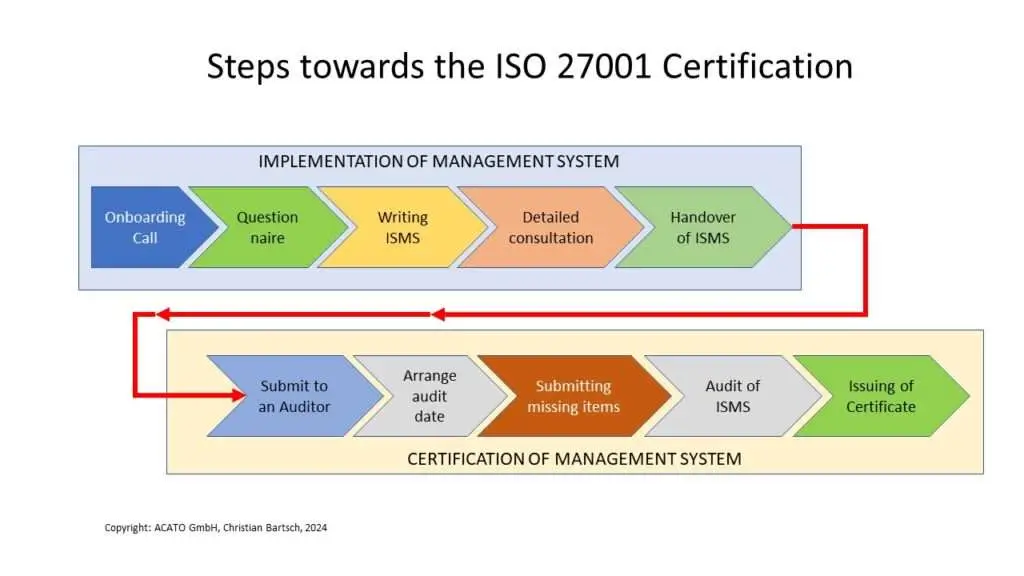
Every project differs slightly, but most follow a similar path:
- A gap analysis to compare your current security practices with the standard.
- A risk assessment covering your information assets, threats and vulnerabilities.
- Selecting and putting in place the right controls, then documenting how they work.
- Staff training and awareness sessions.
- An internal audit and management review to check the system is working.
- The external certification audit, done in two stages by an accredited certification body.
Our guide to ISO certification audit stages explains what happens during Stage 1 and Stage 2, and our checklist of documents required for ISO certification helps you prepare early.
It also helps to understand who does what. Our article on ISO consultant vs certification body clears up a common confusion, and our breakdown of ISO certification cost in Kenya covers what shapes your budget.
It Works Well With Other ISO Standards
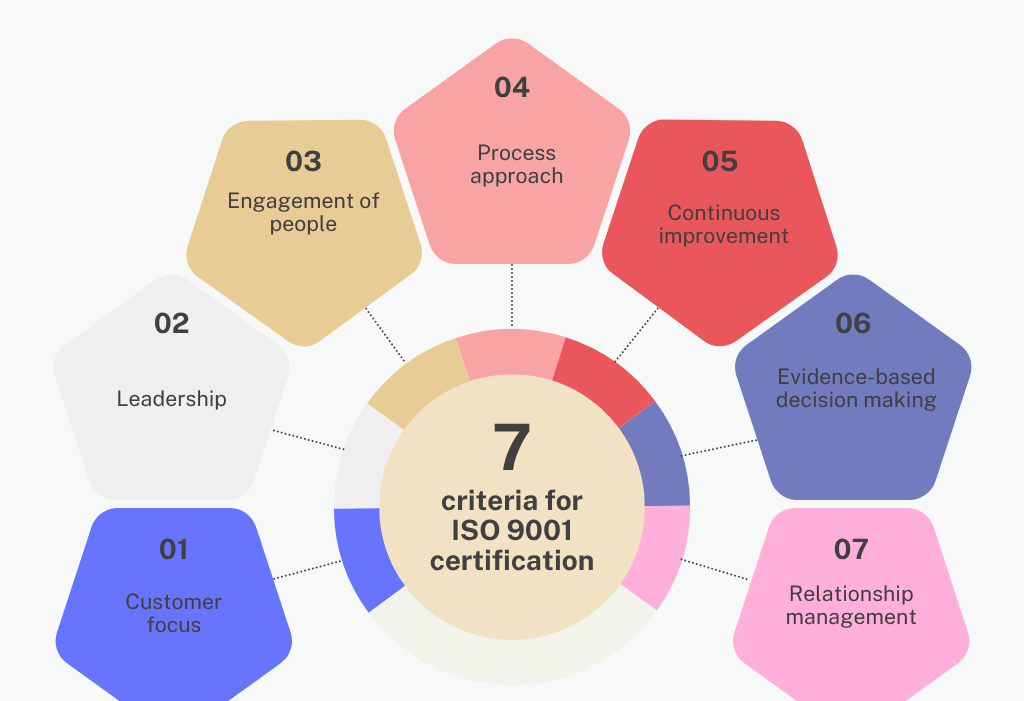
ISO 27001 shares the same high-level structure as ISO 9001 quality management and ISO 22301 business continuity. If you already hold one of these, your document control, internal audits and management reviews carry straight over.
Security and continuity overlap heavily. Backups, incident response and supplier controls appear in both, so many firms combine them into one integrated system.
Frequently Asked Questions
How long does ISO 27001 certification take?
Most projects run three to six months from gap analysis to the certification audit. Organisations with an existing ISO system often finish faster.
Is ISO 27001 mandatory for businesses in Kenya?
No, it’s voluntary. That said, the Data Protection Act, tender requirements and client contracts are pushing more firms towards it every year.
Can a small Mombasa business get certified?
Yes. The standard scales to your size and risks, and a smaller scope usually means a shorter, simpler project. Our ISO consultants in East Africa regularly work with small and mid-sized firms.
Final Thoughts
Data now moves through Mombasa’s ports, hotels and banks faster than ever, and so do the threats that come with it. If you have been weighing up ISO 27001 certification Mombasa clients and partners will recognise, the case is simple: it gives your business a tested way to protect that data, and gives customers proof they can check.
- It turns information security from guesswork into a managed system.
- It supports your duties under Kenya’s Data Protection Act.
- It helps you win tenders and keep demanding international clients.
Ready to Protect Your Business Data?
AceQu helps organisations in Mombasa and across East Africa implement and certify ISO 27001, from the first risk assessment to the final audit and beyond. Book a free consultation and see how close you already are.
Talk to Our ISO 27001 TeamFor the standard’s own description, see ISO’s official page on ISO/IEC 27001.