
ISO 45001 Certification: Dar es Salaam Workplaces Can’t Leave Safety to Luck
Walk past any construction site in Dar es Salaam and you’ll see the city growing floor by floor. Cranes over Upanga, new warehouses along Nyerere Road, trucks queuing for the port. It’s exciting to watch, and it’s also where a lot of people get hurt.
That’s why ISO 45001 certification in Dar es Salaam has moved from a nice extra to something clients, lenders and regulators actually ask about. The standard gives you a practical way to find hazards before they injure someone, and to prove to outsiders that safety isn’t just a poster on the canteen wall.
Below, we’ll cover what ISO 45001 involves, how it sits alongside Tanzanian law, and what certification looks like for a business in the city.
What ISO 45001 Actually Is
ISO 45001:2018 is the international standard for occupational health and safety management systems, often shortened to OH&S. In plain terms, it’s a structured way of running safety as part of the business, rather than as a separate job for one overworked safety officer.
The standard expects you to have these elements in place:
- Hazard identification and risk assessment: spotting what could hurt people, from working at height to repetitive strain, and deciding how to control it.
- Worker consultation and participation: the people doing the job help identify risks and shape the controls.
- A register of legal requirements, so you know which laws and regulations apply to you and whether you’re meeting them.
- Emergency preparedness, including fire drills, first aid and evacuation plans that people have actually practised.
- Incident investigation that looks for the root cause, not just someone to blame.
- Management review and continual improvement, so the system gets better each year.
The standard’s official summary sits on ISO’s page for ISO 45001:2018, and you can see how we support organisations on our ISO 45001 occupational health and safety page.
The Safety Risks Dar es Salaam Workplaces Deal With Every Day
Every city has its own mix of hazards. In Dar es Salaam, a handful come up again and again:
- Construction and building work, where falls, collapsing scaffolding and poorly supervised subcontractors cause serious injuries.
- Port, warehousing and logistics operations, with heavy vehicles, forklifts and manual handling in tight spaces.
- Manufacturing and processing plants in the city’s industrial areas, where machinery, noise, dust and chemicals are part of the daily routine.
- Road risk for delivery riders, drivers and field staff navigating some of the busiest traffic in East Africa.
- Heat and humidity, which quietly increase fatigue, dehydration and mistakes on outdoor jobs.
- Fire risk in crowded commercial areas such as Kariakoo, where stock, wiring and foot traffic all compete for space.
The Kariakoo building collapse in November 2024 was a painful reminder of what happens when structural, supervision and safety checks fall through the gaps. Most incidents are far smaller, but they follow the same pattern: the warning signs were there, and nobody owned the job of acting on them.

How ISO 45001 Fits With Tanzanian Law
In Tanzania Mainland, workplace safety is governed by the Occupational Health and Safety Act of 2003, and enforced by the Occupational Safety and Health Authority (OSHA). Under the Act, workplaces must be registered before they start operating, and OSHA carries out inspections that can cover plant, electrical safety, hygiene, construction and ergonomics.
Enforcement has also been tightening. A government directive issued in December 2025 required employers across the country to register their workplaces with OSHA within 90 days from January 2026.
ISO 45001 doesn’t replace any of these legal duties. What it does is give you a system for meeting them consistently, so an OSHA inspection becomes a routine check rather than a scramble to find paperwork.
- Your legal register shows exactly which requirements apply to each site.
- Regular internal audits catch gaps before an inspector does.
- Records of training, medical checks and inspections are kept in one controlled place.
What Certification Actually Changes
Plenty of companies in Dar es Salaam have a safety policy. Certification is different because an independent auditor has to see that the system is working on the ground, not just signed off in the boardroom.
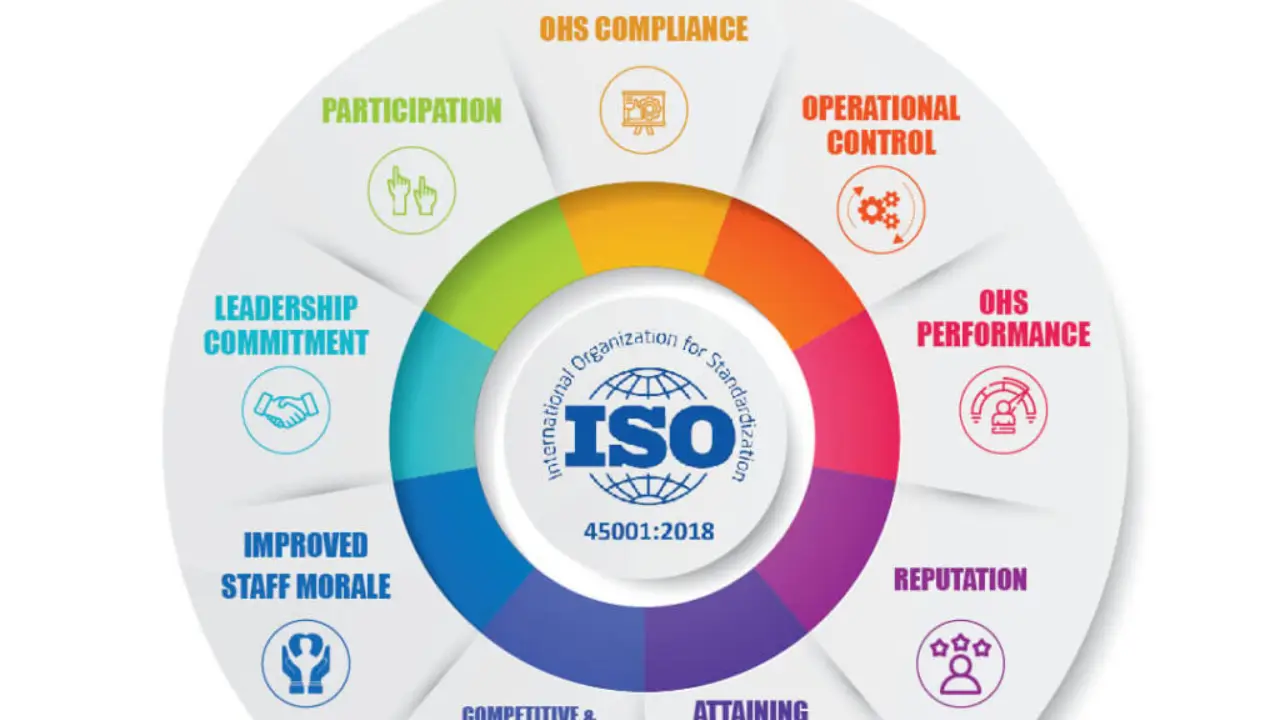
Fewer Incidents and Less Lost Time
When hazards are assessed before work starts, fewer people get hurt. That means fewer days lost, lower compensation claims and less disruption to projects running on tight deadlines.
Access to Bigger Contracts
Mining houses, energy companies, international contractors and donor-funded projects commonly ask suppliers for evidence of a managed safety system. An ISO 45001 certificate answers that in one line of a tender response, and without it you may not make the shortlist.
A Stronger Safety Culture
- Workers feel safer raising concerns, because the system expects them to.
- Supervisors have clear responsibilities instead of vague expectations.
- Staff turnover tends to drop when people believe the company takes their wellbeing seriously.
- Some insurers look more favourably on organisations that can evidence their risk controls.
Basic Compliance vs an ISO 45001 Certified System
Here’s how a compliance-only approach compares with a certified management system once you look past the paperwork:
| Area | Basic Legal Compliance Only | ISO 45001 Certified System |
|---|---|---|
| Approach to hazards | Fixed after an accident or an inspection finding | Identified and assessed before work starts, then reviewed regularly |
| Legal requirements | Handled when OSHA visits or a notice arrives | Tracked in a legal register and checked for compliance on a schedule |
| Worker involvement | Safety is “management’s job” or the safety officer’s | Workers consulted and involved in hazard reporting and decisions |
| Contractors | Often left to manage their own safety | Controlled through clear requirements before they step on site |
| Incidents | Recorded, sometimes, then forgotten | Investigated for root causes, with corrective actions followed up |
| Proof for clients | Photos of PPE and a signed policy | Internationally recognised certificate from an accredited body |
Which Dar es Salaam Organisations Benefit Most
ISO 45001 is written to fit any organisation, whatever its size. Even so, some sectors in the city feel the pressure sooner:
- Construction companies and subcontractors working on commercial, residential and infrastructure projects.
- Port operators, clearing and forwarding agents, and logistics firms moving cargo inland.
- Manufacturers in food and beverage, plastics, steel, cement and packaging.
- Oil, gas and energy service providers, where client safety requirements are strict.
- Hospitals, clinics and laboratories managing biological and chemical hazards.
- Hotels, security firms and facilities management companies with large frontline teams.
Smaller firms shouldn’t rule it out. A 30-person workshop doesn’t need the same system as a cement plant, and a good consultant will size the documentation to match.

What the Road to ISO 45001 Certification Looks Like
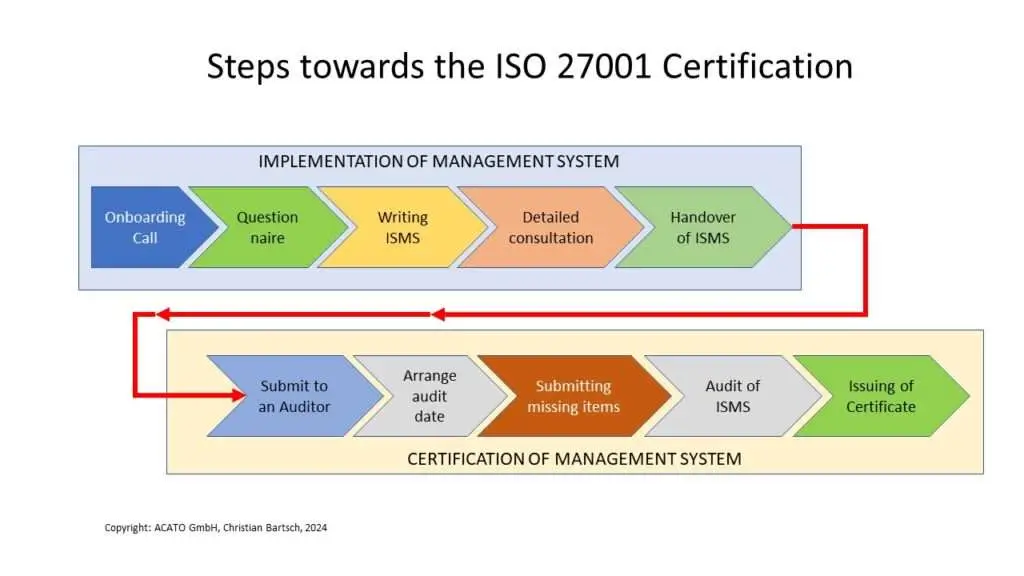
Every project is slightly different, but most follow a similar path:
- A gap analysis comparing your current safety arrangements with the standard.
- Hazard identification and risk assessments for each site, task and role.
- Written procedures, a legal register and clear safety responsibilities.
- Training for managers, supervisors and workers, plus emergency drills.
- An internal audit and management review to check the system is working.
- The external certification audit, carried out in two stages by an accredited certification body.
If the audit process is new to you, our guide to ISO certification audit stages explains what happens in Stage 1 and Stage 2. It also helps to go through our list of documents required for ISO certification before you begin.
Working with experienced ISO consultants in East Africa usually saves time, particularly when you’re juggling certification with live projects.
It Works Well With Other ISO Standards
ISO 45001 shares the same high-level structure as ISO 14001 environmental management and ISO 9001 quality management. Many Dar es Salaam firms combine safety and environmental management into one integrated system, since spills, waste and chemical handling affect both.
If you already hold ISO 9001, your document control, internal audits and management reviews carry straight over, which can shorten the project noticeably.
Frequently Asked Questions
Is ISO 45001 mandatory in Tanzania?
No. OSHA registration and compliance with the Occupational Health and Safety Act are legal requirements, but ISO 45001 certification is voluntary. Many clients and tender boards now expect it, though.
How long does ISO 45001 certification take?
Most organisations take around four to six months from gap analysis to the certification audit. Larger, multi-site operations may need longer.
Does ISO 45001 replace OHSAS 18001?
Yes. ISO 45001 replaced OHSAS 18001, and certificates issued under the old standard are no longer valid. Organisations still working to OHSAS 18001 need to move to ISO 45001.
Final Thoughts
Dar es Salaam is building fast, and the risks that come with that growth aren’t going away. ISO 45001 certification in Dar es Salaam gives you a tested way to protect your people, stay on the right side of OSHA and win work with clients who won’t compromise on safety.
- It moves safety from reacting after accidents to preventing them.
- It gives clients and tender boards independent proof of your safety standards.
- It fits neatly beside ISO 9001 and ISO 14001 if you already hold them.
Ready to Make Safety Part of How You Work?
AceQu helps organisations in Dar es Salaam and across East Africa implement and certify ISO 45001, from the first gap analysis to the final audit. Book a free consultation and find out how close your current arrangements are to certification.
Talk to Our ISO 45001 Team