
How to Choose the Right ISO 45001 Certification Services Provider
Choosing between ISO 45001 certification services providers is trickier than it looks on paper. Every certification body will tell you it’s accredited, experienced and easy to work with. Some of that is true. Some of it is marketing copy dressed up as a promise.
The provider you pick decides how your Stage 1 and Stage 2 audits actually go, how much rework your team ends up doing, and whether the certificate you receive holds any weight with clients, regulators or tender boards. This guide sets out what genuinely separates a solid provider from one that will slow you down.
Why the Provider You Choose Actually Changes the Outcome
An ISO 45001 audit isn’t a box-ticking exercise, even though a rushed provider can make it feel that way. The auditor assigned to your organisation decides how thoroughly your hazard identification process gets tested, how much documentation gets flagged as a non-conformity, and how realistic your timeline turns out to be.
Two providers can quote the same price for the same standard and still deliver very different experiences. One might send an auditor who understands construction site risk assessments inside out. Another might send someone whose background is entirely in office-based quality systems, working from a generic checklist. The certificate looks identical either way. What happens in the twelve months after it’s issued usually doesn’t.
This is why comparing providers properly, rather than defaulting to whoever responds first, tends to pay off. A short list of the right checks, done before you sign anything, is far cheaper than fixing a poor certification decision halfway through your first audit cycle.
Start With Accreditation, Not the Price Tag
Price is usually the first thing organisations compare, and it’s the wrong place to start. An ISO 45001 certificate only carries weight if it’s issued by a body accredited to certify against that specific standard, by a recognised national accreditation body.
Before anything else, ask a potential provider to show you:
- Their accreditation certificate and the scope it actually covers
- Confirmation that ISO 45001 specifically falls within that scope, not just ISO 9001 or ISO 14001
- The name of the accreditation body they operate under, so you can verify it independently
A provider who hesitates, gives a vague answer, or steers the conversation straight back to pricing is worth treating with caution. This is the one part of the decision that really isn’t negotiable.
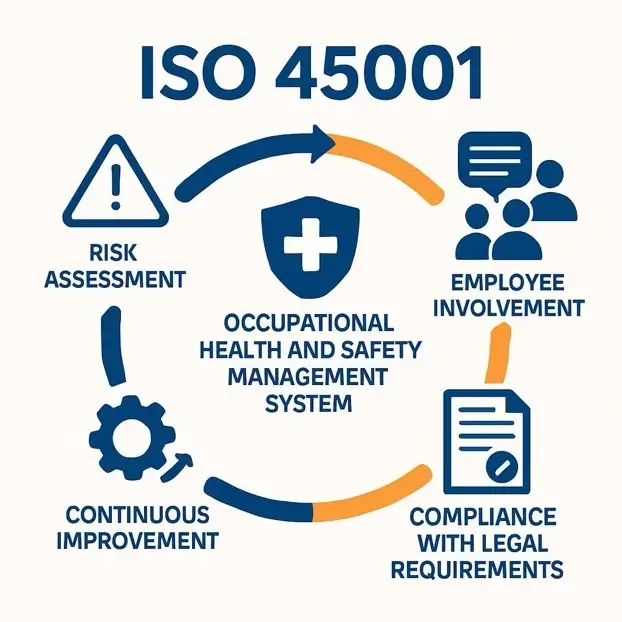
Look for Genuine Occupational Health and Safety Experience
General ISO experience isn’t the same as occupational health and safety experience. A provider that has mostly handled quality management audits will approach ISO 45001 differently to one that has spent years assessing physical risk in warehouses, on construction sites, or inside manufacturing plants.
When you’re comparing ISO 45001 certification services, it’s worth asking:
- Which sectors their current auditors have hands-on experience in
- Whether they can name a handful of organisations similar in size or risk profile to yours
- How they handle industries with unusual or higher-risk hazards, if that applies to you
A provider that can talk through real hazard scenarios in your sector, without reaching for a generic slide deck, is usually the one who’ll spot the risks that actually matter during your audit.
Understand What’s Actually Included Before You Compare Quotes
Two quotes that look similar on the surface can cover completely different amounts of work. Some providers price the audit alone. Others bundle in gap analysis, documentation review and a defined number of surveillance visits.
Ask exactly what’s covered:
- Gap assessment against ISO 45001 before the formal audit begins
- Stage 1 and Stage 2 audit days, and how many are included
- Support with corrective actions if non-conformities are raised
- Annual surveillance audits, and what they cost going forward
- Whether training for your internal team is included or charged separately
Understanding the full ISO certification cost before you commit saves you from a quote that looks cheap upfront and turns out expensive by year two.
Comparing Provider Types at a Glance
Not every certification body operates the same way. Some prioritise speed, some prioritise thoroughness, and a few cut corners in ways that only become obvious once your certificate is already at risk. The table below sets out what tends to separate a dependable provider from one that’s best avoided.
“`| What to Check | Reliable Provider | Provider to Be Cautious Of |
|---|---|---|
| Accreditation | Accredited by a recognised national body, with ISO 45001 explicitly in scope | Vague about accreditation, or the scope doesn’t clearly cover ISO 45001 |
| Audit team | Auditors with sector-specific health and safety experience | Generalist auditors working from a standard checklist |
| Pricing | Clear breakdown of Stage 1, Stage 2 and surveillance costs | One flat figure with no explanation of what’s included |
| Timeline | Realistic estimate based on your organisation’s current readiness | Promises an unusually fast turnaround regardless of your starting point |
| Post-certification support | Ongoing guidance through annual surveillance audits | Little to no contact once the certificate is issued |
| Communication | A consistent point of contact throughout the process | A different, unfamiliar contact at every stage |
Understand the Audit Process and Realistic Timelines
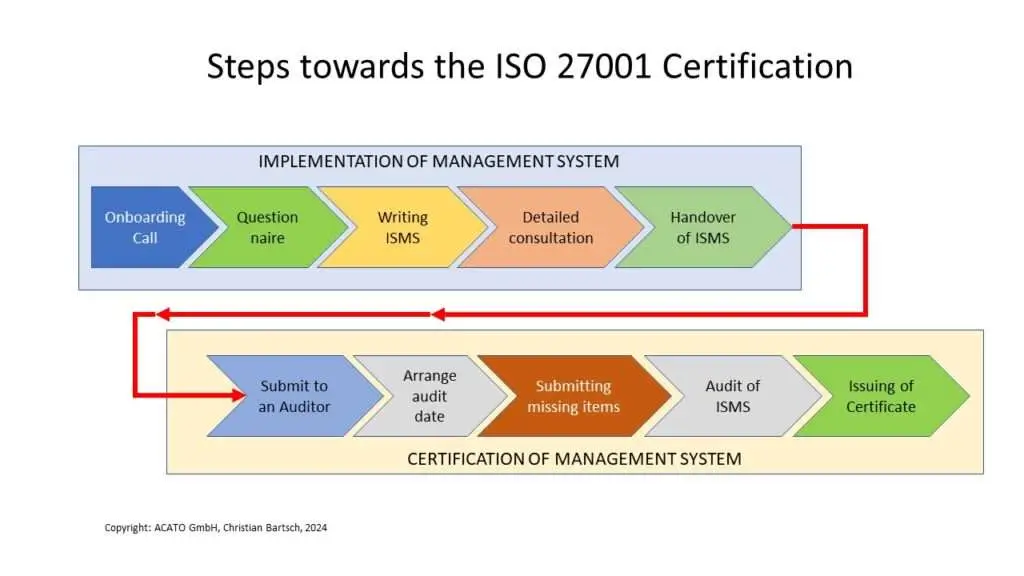
A trustworthy provider will walk you through the process before you’ve signed anything, not after. The path to certification typically runs through an initial gap assessment, a Stage 1 audit to check your documentation and readiness, a Stage 2 audit that tests whether your system works in practice, and then annual surveillance audits to maintain your certificate.
For most organisations, the full ISO audit and certification process takes three to six months, depending on how mature your existing health and safety practices already are. Be wary of any provider who promises a certificate in a matter of weeks. Speed at that scale usually means shortcuts, and shortcuts in an occupational health and safety system are exactly what the standard exists to prevent.
Ask About Support After the Certificate Is Issued
Getting certified is not the finish line. Your certification body should still be involved through annual surveillance audits, and ideally available if you need guidance between visits.
Before choosing a provider, ask:
- How surveillance audits are scheduled, and what they typically involve
- Whether you’ll have a consistent contact or a different auditor each time
- What happens if a non-conformity is raised during surveillance
- Whether ISO consultants are available if your team needs extra support maintaining the system
A provider that treats certification as an ongoing relationship, rather than a one-off transaction, tends to be the one whose clients stay certified without drama. It’s a fair question to ask outright during your first conversation, rather than assuming it will sort itself out later.
Red Flags Worth Walking Away From
A handful of warning signs tend to show up again and again with providers worth avoiding:
- They can’t produce accreditation documents on request, or the documents don’t clearly cover ISO 45001
- Pricing is a single number with no explanation of what it includes
- They guarantee certification before any assessment has taken place, which isn’t something a genuine audit process can promise
- Contracts lock you in for multiple years with penalties for leaving
- There’s no clear point of contact once the sales conversation ends
None of these are automatically disqualifying on their own. Together, they’re usually a pattern worth noticing.
Questions Worth Asking Before You Sign Anything
A short list of direct questions, asked early, saves a lot of frustration later:
- Are you accredited for ISO 45001 specifically, and by whom?
- What does your quote include, and what costs extra?
- How many audit days will our organisation need, and why?
- Who will our auditor be, and what’s their background in our industry?
- What happens if we don’t pass Stage 2 on the first attempt?
- What support is available after certification?
A provider who answers these plainly, without deflecting back to a sales pitch, is generally the one worth working with.
Choosing a Provider You Can Actually Work With
There’s no single “best” ISO 45001 certification services provider for every organisation. The right choice depends on your industry, your existing health and safety maturity, and how much support you want beyond the audit itself. What matters is asking the right questions early, checking accreditation properly, and being honest about what your organisation actually needs from the relationship. Take the time to compare at least two or three providers against the same set of questions before deciding.
At AceQu, we provide accredited ISO certification services across Kenya and East Africa, built around straightforward communication and audits carried out by people who understand occupational health and safety in practice, not just on paper.
Frequently Asked Questions
“`How do I know if an ISO 45001 certification body is legitimate?
Check whether the certification body is accredited by a recognised national accreditation body, such as the Kenya Accreditation Service (KENAS), or another member of the International Accreditation Forum (IAF). A certificate from a body outside this network is not internationally recognised, even if it looks official.
Should I hire a consultant, or go straight to a certification body?
Most organisations use both. A consultant helps build the management system and prepares your business for audit; the certification body conducts the independent audit and issues the accredited certificate. A certification body cannot also act as your consultant without compromising its independence.
What experience should an ISO 45001 provider have?
Look for a provider with specific experience in occupational health and safety systems, not just general ISO consultancy, and ideally with a track record in your sector, since risk profiles differ significantly between an office environment and a manufacturing site.
Is the cheapest ISO 45001 provider a red flag?
Not automatically, but a price far below market rate often means a shortened process that skips proper risk assessment or staff training, which shows up later as non-conformities during the actual certification audit. Cost should be weighed against scope and experience, not treated as the only factor.
To verify a certification body’s accreditation status directly, the Kenya Accreditation Service (KENAS) is the national body that oversees this in Kenya.
“`Ready to Get Started With ISO 45001 Certification?
Speak to our team about accredited ISO 45001 certification services built around your organisation’s size, sector and risk profile.
Contact AceQu Today