
ISO 9001 Explained: The Starting Point for Most ISO Certification Services
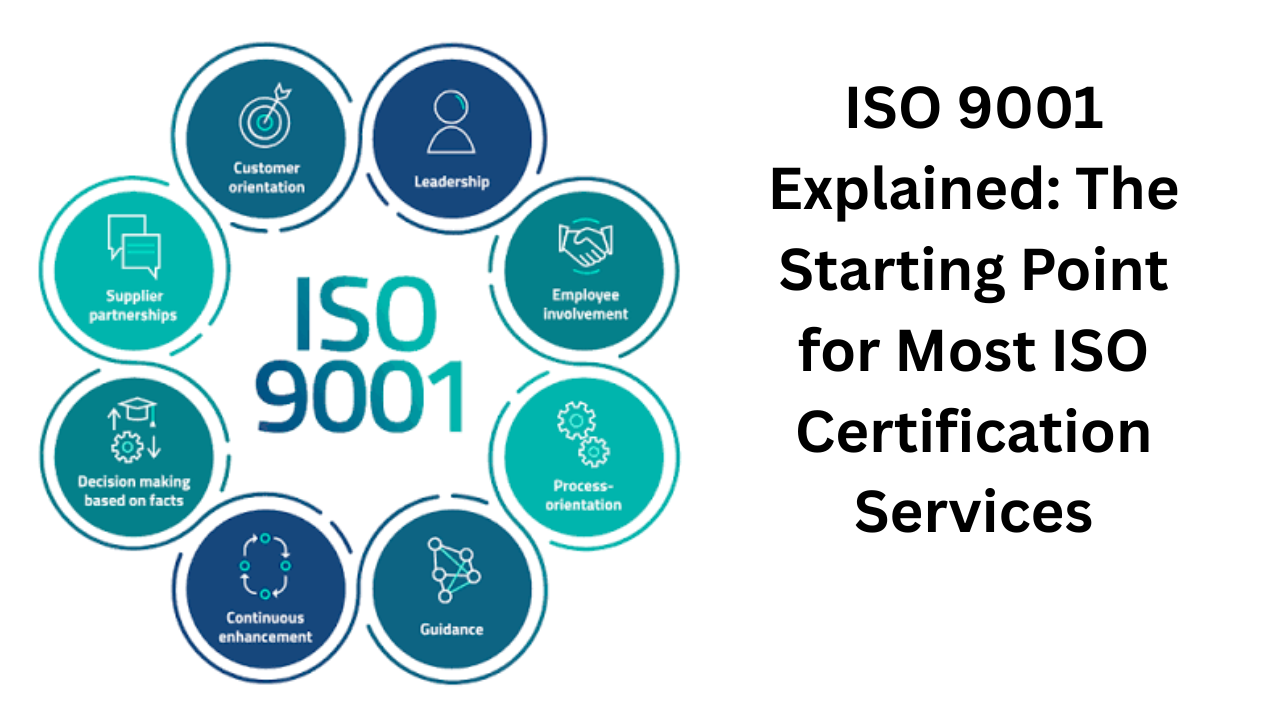
A client asks for ISO certification. Nobody's told you which standard yet, but there's a decent chance it's ISO 9001 before anything else gets mentioned. That's not a coincidence — it's the standard almost every business runs into first, whether the trigger is a tender requirement, a bigger client asking for proof of process, or simply outgrowing the point where "we've always done it this way" is good enough.
If you're weighing up ISO certification services and keep seeing 9001 mentioned ahead of 14001 or 45001, here's what it actually covers, why it tends to come first, and where it sits relative to the other two standards.
What ISO 9001 Actually Covers
ISO 9001 is a quality management standard. It isn't about a specific product, sector, or piece of equipment — it's about how a business runs its processes so the outcome is consistent, whether that outcome is a manufactured part, a consulting report, or a plate of food leaving a kitchen.
In practice, that means documented processes for how work gets planned and carried out, a way of catching and correcting problems when something goes wrong, internal audits to check the system is actually being followed (not just written down), and a management review that feeds lessons back into how the business operates. None of it is industry-specific, which is exactly why it applies as easily to a five-person consultancy as to a two-hundred-person manufacturer.
Why It's Usually the First Standard Businesses Pursue
Three things push ISO 9001 to the front of the queue. It's the standard most often named explicitly in tenders and client contracts, so it solves an immediate commercial problem rather than a hypothetical future one. It's also the most established of the three — the documentation templates, auditor familiarity, and general market understanding of what "ISO 9001 certified" means are all further along than for 14001 or 45001. And its structure (documented processes, risk thinking, internal audit, management review) is the same skeleton the other two standards use, just pointed at different questions.
Academic research backs up how far this adoption has already gone regionally — one study looking at Kenya's top 100 SMEs found that roughly 30% had already implemented an ISO 9001 quality management system, which tells you it's well past being a large-company-only exercise.
How ISO 9001 Differs From ISO 14001 and ISO 45001
Once a business has built the core management system for 9001, adding the other two standards becomes a question of extending that same structure rather than starting again.
| Standard | What It's Actually About | Typical Trigger |
|---|---|---|
| ISO 9001 | Quality management — consistently meeting customer requirements | Tender requirement; a client asking for proof of process; scaling past informal methods |
| ISO 14001 | Environmental management — managing environmental impact and risk | Regulatory pressure; clients requiring evidence of environmental controls |
| ISO 45001 | Occupational health and safety — managing workplace risk to staff | Physical or site-based operations with genuine workplace risk |
None of these three standards replaces the others. A business in manufacturing or construction will often end up holding all three eventually, because customer quality, environmental responsibility, and worker safety are genuinely separate concerns that happen to sit on the same management system foundation.
Why ISO 9001 Is the Foundation the Others Build On
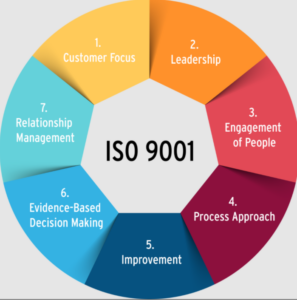
This is the part that matters most if you're thinking beyond a single certificate. A business that's already built solid 9001 documentation — process maps, internal audit records, a working management review cycle — is most of the way to adding 14001 or 45001, because the underlying system is already doing the heavy lifting. Environmental risk registers or safety incident logs get layered on top of an existing structure rather than requiring a second system built from nothing.
Businesses that skip 9001 and go straight for a sector-specific standard often end up building the same foundational processes anyway — just without the benefit of the most widely understood, most audited version of that foundation already being in place.
What This Means If You're Choosing ISO Certification Services
If you're comparing ISO certification services and aren't sure where to start, 9001 is the safe default unless a specific tender or regulator is already asking for 14001 or 45001 by name. It gets you a widely recognised certificate, builds the management system infrastructure you'll reuse later, and doesn't lock you out of adding other standards down the line.
The cost side of that decision — what a 9001 project actually runs, and what changes the number — is covered in the breakdown on ISO certification cost, which is worth reading alongside this if budget is the next question.
Weighing up ISO 9001 against your business's actual situation?
AceQu works with businesses starting from nothing and businesses adding 9001 on top of an existing system. A short conversation is usually enough to tell you which category you're in.
Frequently Asked Questions
What does ISO 9001 actually cover?
ISO 9001 sets out requirements for a quality management system — how a business plans its work, controls its processes, catches and fixes problems, and keeps improving over time. It applies to how a business runs, not to any particular product or industry.
Why do most businesses get ISO 9001 before other standards?
ISO 9001 is the most widely requested standard in tenders and client contracts, and its core structure — documented processes, internal audits, management review — is the same structure that ISO 14001 and ISO 45001 build on. Getting it first means later standards add on top rather than starting from nothing.
How is ISO 9001 different from ISO 14001 and ISO 45001?
ISO 9001 covers quality management — consistently meeting customer requirements. ISO 14001 covers environmental management, and ISO 45001 covers occupational health and safety. All three share the same underlying management system structure, but each asks different questions of that structure.
Can a small business realistically get ISO 9001 certified?
Yes. ISO 9001 applies to organisations of any size, and the scope of the audit is proportionate to how complex the business actually is. A ten-person business has fewer processes to document and a shorter audit than a 200-person one, not the same workload scaled down.
For the standard's own description of what ISO 9001 requires, iso.org's overview of ISO 9001 and quality management is the primary source behind the requirements referenced above.